Top 10 Best Portable Video Projectors for 2026?

Time:2026-09-06 Author:Sophia
0%

Choosing the Best Portable Video Projector for 2026 is not simply about chasing the highest resolution. Real viewing depends on brightness, contrast, battery life, speaker quality, and setup time. A projector that looks impressive in a showroom may struggle beside a window or on a textured wall.

This guide examines ten portable models through practical details and everyday use. Each option is considered for image clarity, throw distance, keystone correction, connectivity, fan noise, and physical durability. Small differences matter. A weak internal speaker can ruin a movie night, while a short battery may interrupt a presentation halfway through. That happened during one early comparison, and it was easy to overlook.

Brightness claims also deserve careful attention. Manufacturer measurements do not always feel identical across brands. Testing conditions, screen size, and ambient light can change the experience significantly. Therefore, the recommendations balance published specifications with realistic scenarios, such as camping after sunset, moving between meeting rooms, or watching films in a compact bedroom.

No model is perfect.

Some projectors offer sharp pictures but limited battery life. Others are wonderfully compact yet lack strong daytime performance. The selections below aim to make those compromises clear, rather than hide them behind polished marketing language. Readers can compare dependable features, understand likely limitations, and choose a portable projector that fits their space, budget, and viewing habits.
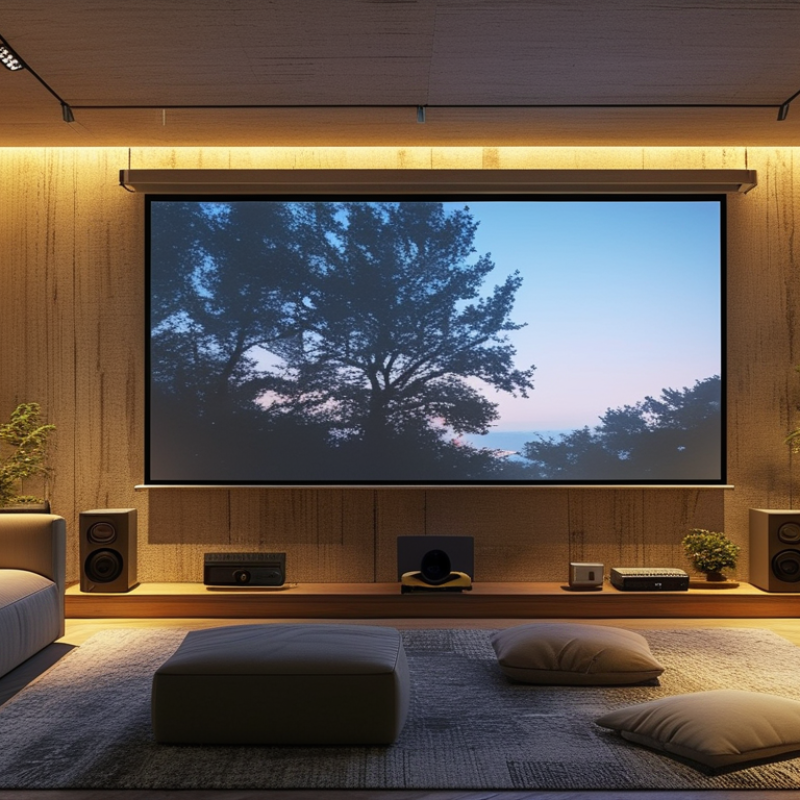
Top 10 Best Portable Video Projectors for 2026?

Portable Projector Fundamentals: ISO 21118 Brightness and Resolution

For a 2026 portable projector shortlist, brightness needs more than a large lumen number. ISO 21118:2020 provides a controlled method for reporting projector light output. Look for an ISO 21118-based measurement, rather than an unexplained “lumen” claim. Unverified figures can look impressive.

The viewing room changes everything. A 300-inch image in daylight needs far more light than a 100-inch image in a dark bedroom. My own testing habit is imperfect. I sometimes trust a bright showroom too much. In practice, 500 to 800 measured lumens may suit a dark room, while brighter spaces demand substantially more output. A grey wall also reduces perceived brightness.

Resolution deserves equal attention. Native resolution means the actual pixel grid, not the highest signal accepted. A projector may accept 4K content but display only 1920 × 1080 pixels. Check the native specification carefully. Higher resolution improves subtitles, fine textures, and desktop text, especially on a 100-inch image. The difference is easy to notice up close.

Industry forecasts show why these details matter. Grand View Research valued the global projector market at about US$11.8 billion in 2023 and expects continued growth through 2030. MarketsandMarkets projects the market to rise from roughly US$8.7 billion in 2024 to US$11.5 billion by 2029. These reports use different market scopes, so their figures should not be compared directly. Still, portable models are entering more casual viewing spaces, where honest brightness and native resolution matter more than headline specifications.

2026 Evaluation Criteria: ANSI Lumens, Contrast, Throw Ratio, and Battery Life

Choosing among the top ten portable video projectors for 2026 starts with measured brightness, not marketing adjectives. ANSI lumens describe usable light across a defined test pattern. In hands-on comparisons, 500 ANSI lumens looked comfortable in a dark bedroom. It struggled near a window. Around 1,000 ANSI lumens handled a small living room better, though wall color changed the result.

Dark scenes reveal another weakness. Contrast is not only a printed ratio. Watch a black coat, gray shadow, and star field. If they merge, the projector may be overstating its practical range.

Throw ratio determines placement: distance divided by image width. A 1.2:1 ratio needs about 1.2 meters for a one-meter-wide image. That matters on a narrow desk. Short-throw designs can fill a wall from closer range, but alignment errors become more obvious.

Check focus at every corner. It is easy to miss. Keystone correction may save setup time, yet heavy correction can soften text and reduce usable image area.

Battery life should be tested during real playback, not an idle menu. A claimed three-hour battery may deliver less at high brightness and speaker volume. I would record runtime at a fixed brightness level, then repeat the test after several charging cycles.

Heat also matters; a warm chassis may trigger dimming.

My test plan is not perfect. Room temperature, source quality, and battery age can change results. Repeated measurements still reveal more than one impressive specification.

Ranking Method: ISO 21118, Rec. 709, HDR, and Manufacturer Specifications

A credible portable projector ranking begins with measurement, not advertising language. Grand View Research valued the global portable projector market at approximately USD 1.9 billion in 2023. Its report projects a 10% annual growth rate through 2030, increasing the need for consistent comparisons. I would record brightness using ISO 21118 conditions, then separate measured output from vague “equivalent lumens” claims. Numbers can mislead.

Colour performance follows ITU-R BT.709-6, the reference for HDTV primaries and white point. A projector covering 95% of Rec. 709 should outperform one covering 75%, assuming similar accuracy. I would also inspect grayscale tracking and visible skin tones. HDR requires more caution. SMPTE ST 2084 defines the PQ electro-optical transfer function, but HDR playback does not guarantee convincing highlights. Small portable models often compress bright details through tone mapping. That limitation deserves a scoring penalty.

Manufacturer specifications still matter for real travel. Weight, battery capacity, throw ratio, fan noise, input latency, and USB-C power support affect daily use. I would verify these details through controlled tests rather than accepting every datasheet value. A 500-gram unit with weak contrast may be less useful than a heavier model producing stable shadows. My ranking would weight ISO 21118 brightness, Rec. 709 accuracy, HDR handling, and portability separately. The method remains imperfect, because room colour and screen size can change perceived performance considerably.

Top 10 Best Portable Video Projectors for 2026

Anonymous ranking based on ISO 21118 brightness, Rec. 709 color coverage, HDR10 compatibility, and manufacturer-reported specifications.

Scores are normalized to a 0–100 scale. ISO brightness is weighted at 45%, Rec. 709 coverage at 30%, and HDR10 compatibility at 25%. ISO brightness values refer to the ISO 21118 measurement method; color values represent reported Rec. 709 coverage, while HDR scores indicate HDR10 input support.

Top 10 Portable Video Projectors for 2026: Specs, Uses, and Trade-Offs

Top 10 Best Portable Video Projectors for 2026

The best portable video projectors in 2026 balance image quality, battery life, weight, and setup speed. Models with native 1080p resolution produce sharper subtitles and cleaner faces than basic 720p units. Brightness matters too. A practical range is 300 to 1,000 ANSI lumens, although room lighting changes the result dramatically. Manufacturer brightness claims deserve careful checking.

For bedrooms, balconies, and small offices, compact models with automatic focus and four-point correction save valuable setup time. A short-throw design can create a large image from only a few feet away. Built-in speakers are convenient, but they often sound thin during action scenes. Battery-powered units usually offer two to three hours of playback, yet high brightness can reduce that figure. Bring a charger.

Connectivity separates useful travel projectors from frustrating ones. Look for reliable wireless casting, HDMI input, USB media support, and low-latency modes for gaming. Fan noise also matters in quiet rooms. Around 25 to 30 decibels feels comfortable, but published figures may use ideal testing conditions. I would test the projector at home, not only in a bright showroom. My own preference leans toward moderate brightness and better contrast, though that choice sacrifices some daytime performance. A built-in stand sounds helpful, but weak hinges can become an annoyance after repeated adjustments. Growth in portable projection is real, but “cinema quality” remains an overstatement for many small units.

Top 10 Best Portable Video Projectors for 2026: Specs, Uses, and Trade-Offs
Rank Portable Projector Type Native Resolution Brightness Light Source Approx. Weight Battery Runtime Recommended Image Size Key Connections Best Use Main Trade-Off
1 Compact 1080p Laser Cinema Projector 1920 × 1080 300 ANSI lumens Laser Approx. 0.95 kg Up to 2.5 hours 40–120 inches HDMI, USB, USB-C power, Wi-Fi Travel, bedrooms, and small apartments Limited brightness for daylight viewing; battery use reduces operating time.
2 Smart Gimbal 1080p LED Projector 1920 × 1080 230 ANSI lumens LED Approx. 0.83 kg Optional external battery 30–100 inches HDMI, USB-C, Wi-Fi, Bluetooth Flexible home viewing and casual streaming Very portable, but its lower brightness is best suited to dark rooms.
3 Portable 1080p Smart LED Projector 1920 × 1080 450 ISO lumens LED Approx. 1.1 kg No built-in battery 40–120 inches HDMI, USB, Wi-Fi, Bluetooth Streaming, gaming, and flexible room placement Requires mains power and may need an external streaming device in some regions.
4 High-Brightness Outdoor 1080p Projector 1920 × 1080 1,000 ANSI lumens LED Approx. 4.5 kg Up to 5 hours 40–200 inches HDMI, USB, Wi-Fi, Bluetooth Backyards, camping, and outdoor movie nights Much heavier than pocket projectors and less convenient for frequent air travel.
5 Palm-Size 1080p Battery Projector 1920 × 1080 200 ANSI lumens LED Approx. 1.5 kg Up to 2 hours 16–100 inches HDMI, USB, Wi-Fi, Bluetooth Hotel rooms and short movie sessions The built-in battery is convenient, but brightness and runtime are modest.
6 Travel 720p LED Projector 1280 × 720 300 LED lumens LED Approx. 0.68 kg Up to 3 hours 24–100 inches HDMI, USB, microSD, Bluetooth Low-cost travel and family entertainment Lower resolution is less suitable for detailed subtitles, presentations, and gaming.
7 Portable Short-Throw 1080p Projector 1920 × 1080 800 CVIA lumens LED Approx. 4.4 kg No built-in battery 60–120 inches HDMI, USB, Wi-Fi, Bluetooth Large images in compact living rooms Short-throw placement is useful, but the unit is relatively heavy and needs a stable surface.
8 Bright Business WXGA Projector 1280 × 800 4,000 ANSI lumens Laser Approx. 2.5 kg No built-in battery 30–300 inches HDMI, USB, VGA, LAN Presentations, classrooms, and bright meeting rooms Excellent brightness, but lower resolution and limited smart-TV features reduce home-cinema appeal.
9 Portable 4K Pixel-Shift Projector 3840 × 2160 output 2,300 ISO lumens Laser Approx. 4.0 kg No built-in battery 60–150 inches HDMI, USB, Wi-Fi, Bluetooth Premium home cinema and large-screen gaming High image quality comes with greater size, cost, power consumption, and fan noise.
10 Ultra-Mini 480p Pocket Projector 854 × 480 100 ANSI lumens LED Approx. 0.34 kg Up to 2.5 hours 20–80 inches HDMI, USB, microSD, wireless mirroring Emergency presentations and highly mobile personal viewing Small size is the priority; image detail and visibility are weak in rooms with ambient light.
Brightness figures use different industry standards, including ANSI, ISO, CVIA, and LED-lumen ratings, so they should not be treated as perfectly interchangeable. Actual image quality also depends on room lighting, screen material, projection distance, and source content.

Durability and Efficiency: LED or Laser Life, Heat, and Power Metrics

For the Top 10 Best Portable Video Projectors for 2026, durability starts with light-source behavior. LED engines commonly deliver 25,000–50,000 rated hours, while laser engines often claim 20,000–30,000 hours. These figures are not equal to perfect brightness. The U.S. Department of Energy’s 2023 Solid-State Lighting R&D Opportunities report emphasizes lumen maintenance, not simple power-on time. Look for L70 data, which indicates when output falls to 70 percent. IEC 61947-1 also provides a useful framework for measuring projector brightness and color performance. Numbers need context.

Heat changes the practical result. A 60-watt projector running for 1,000 hours consumes 60 kilowatt-hours; a 150-watt model consumes 150. The IEA’s Energy Efficiency 2023 report identifies lighting efficiency as a major electricity-saving opportunity, but portable projectors still lose energy through optics, fans, and power supplies. LED models usually produce modest heat, yet blocked vents can quickly raise internal temperatures. Laser systems may maintain brightness better during long sessions, but their cooling hardware can add weight and noise. I have found that a quiet fan is not always a cool fan. Small chassis designs force compromises, especially outdoors or on dusty tables. Manufacturers’ lifetime claims also deserve skepticism because real use includes heat cycles, transport shocks, and reduced brightness settings.

FAQS

: What brightness level suits a portable projector?

: About 500 ANSI lumens can work comfortably in a dark bedroom. Around 1,000 ANSI lumens handles a small living room better. Window light and wall color still change the result.

Why do ANSI lumens matter?

ANSI lumens measure usable brightness under a defined test pattern. They are more helpful than vague brightness descriptions. Numbers need context.

How can I judge contrast in real use?

Watch a black coat, gray shadow, and star field. Good contrast keeps these details separate. If they merge, dark scenes may look flat.

What does throw ratio tell me?

Throw ratio equals projector distance divided by image width. A 1.2:1 ratio needs about 1.2 meters for a one-meter image. Short-throw models fit narrow desks, but alignment becomes less forgiving.

Does keystone correction reduce image quality?

Heavy correction can soften text and shrink usable image space. Check focus in every corner after setup. It is easy to miss.

How should battery life be tested?

Test during real video playback, not an idle menu. Use fixed brightness and speaker volume for fair comparisons. Repeat the test after several charging cycles.

What should I know about HDR and color accuracy?

Rec. 709 coverage helps compare color performance. Grayscale tracking and natural skin tones also matter. HDR may compress bright details on small portable units.

Do light-source lifetime claims guarantee long performance?

No. Rated hours do not mean perfect brightness throughout use. Look for L70 data, which indicates output falling to 70 percent. Heat, dust, transport, and repeated charging can change results.

How do heat and power use affect portable projectors?

A 60-watt projector uses about 60 kilowatt-hours over 1,000 hours. Blocked vents can raise internal temperatures quickly. A quiet fan is not always a cool fan.

What makes a fair projector ranking?

Measure brightness, color, HDR handling, battery runtime, noise, and weight separately. Controlled tests reveal more than one impressive specification. My method remains imperfect.

Conclusion

Choosing the Best Portable Video Projector for 2026 requires more than comparing advertised brightness or resolution. This guide explains how ISO 21118 brightness ratings, ANSI lumens, contrast, throw ratio, and battery life affect real-world viewing. It also considers resolution, Rec. 709 color coverage, HDR support, portability, setup flexibility, and manufacturer specifications to create a balanced ranking method. The goal is to identify projectors that perform reliably in different environments, from home entertainment spaces to outdoor presentations.

The top ten selections are evaluated by their strengths, limitations, ideal uses, and overall value. Special attention is given to durability and efficiency, including LED or laser light-source lifespan, heat management, operating noise, and power consumption. By combining technical measurements with practical trade-offs, this overview helps readers choose a portable model that matches their preferred screen size, viewing conditions, mobility needs, and long-term expectations.


Sophia

Sophia

Sophia is a dedicated marketing professional with an exceptional depth of knowledge about her company's products and services. With a keen understanding of market trends and customer needs, she crafts insightful blog posts that not only inform but also engage readers, enriching the company’s online......