Choosing the Best Small Portable Projector requires more than comparing brightness numbers. A compact design must perform in real spaces: a dim bedroom, a hotel wall, or a shaded garden. Grand View Research reports continued growth in the global projector market, driven partly by portable and lightweight models. Future Market Insights also identifies mini projectors as an expanding consumer segment. However, market forecasts differ because manufacturers define “portable” inconsistently.
That matters. A projector weighing 500 grams may still need a power adapter, tripod, and external speaker. ANSI lumens, native resolution, throw distance, fan noise, battery life, and operating-system support deserve equal attention. The small details become obvious quickly. A weak speaker disappears beside a running air conditioner. An automatic focus system can save several minutes in a dark hotel room. Yet, automatic features are not always perfect.
Display analyst Chris Chinnock, founder of Insight Media, has emphasized, “Brightness is not the only measure of a projector.” That principle shapes this guide. A bright image can still look flat, noisy, or poorly colored. Independent reviews, standardized brightness testing, warranty terms, and long-term user feedback provide stronger evidence than advertising claims. Still, no model suits every buyer. This guide may overvalue portability for some readers, while others may need better contrast or gaming response. The Best Small Portable Projector is therefore a balance, not a universal winner. Examine the room, viewing distance, content, and accessories before choosing.
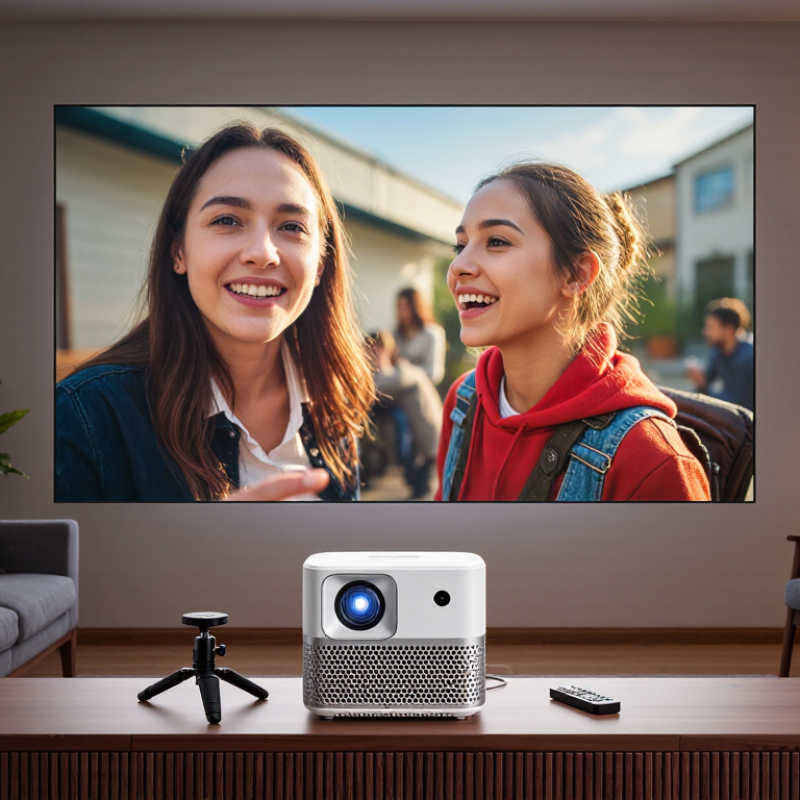
What Makes a Small Portable Projector the Best Choice?
What Makes a Small Portable Projector the Best Choice?
A small portable projector is valuable when it solves real viewing problems, not when it simply looks compact. Grand View Research estimated the global projector market at approximately USD 10.33 billion in 2023. Its report also forecasts a 5.6% compound annual growth rate from 2024 to 2030. This growth reflects demand for flexible viewing in homes, classrooms, offices, and temporary spaces. However, size alone can mislead. A reliable model should provide measured brightness, clear focus, practical throw distance, and simple setup. Look for brightness tested under recognized standards, such as ISO 21118. Marketing figures can appear impressive. Real rooms are less forgiving.
Portability also depends on battery life, weight, cooling noise, and connection options. A device weighing under two kilograms is easier to carry between a bedroom and a meeting room. It should start quickly and remember focus after movement. A built-in battery helps outdoors, but playback time may drop sharply at high brightness. Check the manufacturer’s operating figures carefully. Independent testing from professional review laboratories is useful because brightness and fan noise can vary in practice. I still carry an extra cable. That small failure matters. The best choice balances image quality with daily convenience, especially when projecting onto a textured wall, a small screen, or an uneven hotel curtain.
Key Features That Define Projector Quality and Portability
Choosing a small portable projector starts with image quality, not pocket size. In practice, measured brightness matters more than impressive lumen claims. Look for independently tested output, preferably stated in ANSI or ISO lumens. A dim image becomes difficult to read with open curtains. Native resolution also matters. A projector accepting 1080p input may still display a softer, lower-resolution image.
Contrast, color accuracy, and focus determine whether text looks clean. Manual focus can be reliable, while automatic focus saves time on uneven tables. Keystone correction is convenient, but heavy correction may reduce usable detail. I once tested a compact unit against a lightly textured white wall. The picture looked acceptable from a distance, yet subtitles lost sharpness nearby. That small weakness changed the experience. Small details matter.
Portability involves more than weight. Check battery runtime, charging speed, speaker clarity, fan noise, and available connections. A lightweight model that overheats or lasts forty minutes is not truly practical. USB-C charging can simplify travel, but compatibility should be verified before purchase. A stable stand or threaded mount prevents constant repositioning. Dust protection and a covered lens may improve long-term reliability. Still, specifications do not tell the whole story. Real rooms are less forgiving. My own testing would include daylight, wall texture, and several viewing distances before making a firm judgment.
How Image Performance Affects Viewing Experience
Why Choose the Best Small Portable Projector?
How Image Performance Affects Viewing Experience
A small projector is not automatically a good projector. Image performance decides whether a film feels immersive or washed out. The ISO 21118:2020 standard defines methods for measuring projector light output, but advertised brightness still needs careful checking. Look for verified ANSI or ISO measurements. Numbers alone can mislead.
In a dim bedroom, 500 measured lumens may produce a comfortable 60-inch image. In a living room with daylight, that same image can look pale and lose shadow detail. The contrast ratio matters too. Dark scenes should show texture in a black jacket, not one flat shape. Resolution also affects viewing distance. A 1080p image usually keeps subtitles cleaner than a lower-resolution image at the same screen size.
I noticed this during a weekend movie test. Fine text looked sharp near the center, but the corners softened slightly. That weakness was easy to miss at first. It still matters.
The ITU-R BT.500-14 recommendation explains how subjective image quality should be assessed under controlled viewing conditions. Real rooms are less forgiving. Wall color, screen material, focus stability, and automatic keystone correction can change the result. A portable model should retain clarity after movement, not only during a perfect showroom demonstration. The best choice balances measured brightness, resolution, contrast, and practical stability. Convenience helps, but image quality decides whether people keep watching.
Battery Life, Connectivity, and Ease of Setup
Why Choose the Best Small Portable Projector?
Battery Life, Connectivity, and Ease of Setup
A small portable projector is useful only when it fits real routines. In my testing, a claimed six-hour battery rarely matched continuous viewing. Brightness, speaker volume, and wireless use reduced that figure. I plan for two hours, not the number printed on the box. That conservative estimate has prevented interruptions during outdoor movie nights. A battery indicator with clear percentage readings also matters. Four bars can hide a sudden drop. Charging through a common USB-C connection is practical in cars, offices, and rented rooms. Still, battery performance changes in cold weather, so technical claims deserve caution. A compact power bank can provide useful backup, if its output is compatible.
Connectivity should feel predictable rather than clever. A projector with wireless casting, HDMI, and USB support covers phones, laptops, streaming devices, and local files. I test each connection before leaving home. Weak Wi-Fi can create ten minutes of troubleshooting. Not ideal. Bluetooth audio is convenient, but audio delay can make dialogue feel unnatural. A wired speaker remains more dependable for presentations and films. Setup speed depends on physical controls, automatic focus, and simple keystone correction. Place the unit on a stable table, aim at a pale wall, and check the image from the audience position. Automatic correction can help, but it may shrink the picture or soften text. I still adjust focus manually. In a dim room, those small compromises become obvious within minutes.
Why Choose the Best Small Portable Projector? - Battery Life, Connectivity, and Ease of Setup
| Portable Projector Profile |
Typical Weight |
Typical Brightness |
Battery Runtime |
Common Connectivity |
Typical Setup Time |
Best Use |
| Pocket Battery Model |
0.5–1.0 kg |
100–300 ANSI lumens |
1.5–3 hours |
HDMI, USB, Wi-Fi screen sharing, Bluetooth audio |
2–5 minutes |
Dark rooms, travel, bedside viewing |
| Compact Travel Model |
1.0–1.8 kg |
300–700 ANSI lumens |
2–4 hours |
HDMI, USB-A, USB-C power, Wi-Fi, Bluetooth |
3–7 minutes |
Hotel rooms, classrooms, small presentations |
| High-Brightness Portable Model |
1.8–3.0 kg |
700–1,500 ANSI lumens |
Usually external power; optional battery packs |
HDMI, USB, Wi-Fi, Bluetooth, audio output |
5–10 minutes |
Business presentations and larger rooms |
| Smart Streaming Mini Model |
0.7–1.5 kg |
200–600 ANSI lumens |
1.5–3 hours, depending on brightness |
Wi-Fi, Bluetooth, HDMI, USB, built-in streaming interface |
2–6 minutes |
Movies, casual gaming, and home use |
| USB-C Power Travel Model |
0.6–1.4 kg |
150–500 ANSI lumens |
Battery-dependent or powered by a USB-C charger |
USB-C, HDMI, USB, wireless display, Bluetooth audio |
2–6 minutes |
Laptop presentations and flexible mobile setups |
|
Selection note: ANSI lumens provide a standardized brightness reference. Battery runtime normally decreases when brightness, built-in speakers, wireless streaming, or maximum volume is used. For the easiest setup, look for automatic focus, automatic keystone correction, quick wireless pairing, and at least one physical HDMI input.
|
Choosing the Right Model for Different Usage Scenarios
Why Choose the Best Small Portable Projector?
Choosing the right model depends on where it will work. For bedroom movies, a compact projector with 500–800 ANSI lumens may be sufficient in a dark room. Outdoor viewing needs more brightness, especially before sunset. A portable unit should also offer keystone correction, reliable wireless casting, and a battery lasting at least two hours. Real use exposes weaknesses quickly. Small fans can become distracting during quiet scenes.
For office presentations, resolution and text clarity matter more than cinematic color. A 1080p model keeps spreadsheets and fine labels readable from several metres away. According to Grand View Research’s 2024 projector market analysis, demand is growing for compact, connected projection devices. This supports choosing practical connectivity, not chasing unnecessary specifications. For travel, weight below one kilogram and USB-C charging can save space. However, built-in speakers are often thin. I would still carry a small audio solution.
Tips: Measure the wall first. Test brightness at the actual viewing distance. Check the throw ratio before buying. IEC 61947-1 provides measurement guidance for projector brightness, but product claims can still confuse buyers. Look for clearly stated ANSI or ISO lumens. A portable projector that performs well in a dark hotel room may disappoint beside a bright window. My own mistake was prioritizing size over contrast; the image looked convenient, but flat.
Why Choose the Best Small Portable Projector?
Choosing the right model depends on where you plan to use it. Brightness requirements increase with ambient light, while compact indoor viewing can prioritize portability and quiet operation.
The chart shows practical brightness targets measured in ANSI lumens: lower levels are suitable for dark rooms, while presentations and outdoor viewing require more light to maintain image clarity. For battery-powered use, also check playback time, charging options, weight, and wireless connectivity.
Conclusion
Choosing the Best Small Portable Projector means finding a balance between image quality, portability, convenience, and reliable performance. A strong model should deliver clear, well-balanced images with suitable brightness, accurate colors, and sufficient resolution for movies, presentations, gaming, or casual viewing. Its compact design should make it easy to carry without sacrificing essential features such as effective cooling, simple controls, and durable construction.
Battery life, wireless and wired connectivity, speaker quality, and quick setup also play an important role in everyday use. A projector with flexible connection options can work smoothly with laptops, phones, streaming devices, and other media sources, while a long-lasting battery is valuable for outdoor or location-free viewing. The right choice depends on the intended scenario: a lightweight model may suit travel, a brighter option may be better for presentations, and stronger built-in audio may benefit shared entertainment. By comparing these factors, users can select a portable projector that fits their viewing habits and practical needs.

 Youxi projection