Explore factory direct quotes, advanced technical hardware blueprints, and versatile display formats for global enterprises.
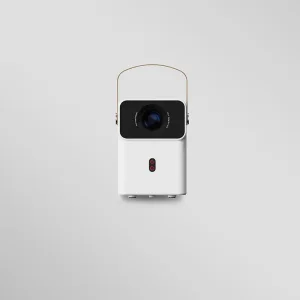
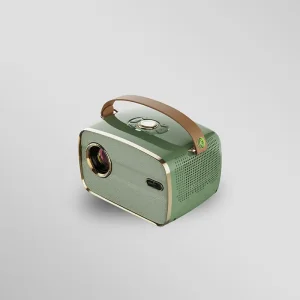
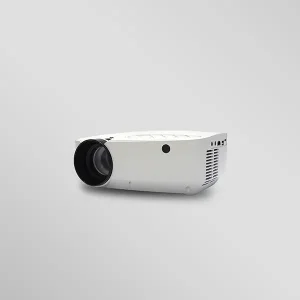
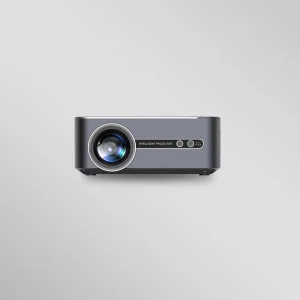
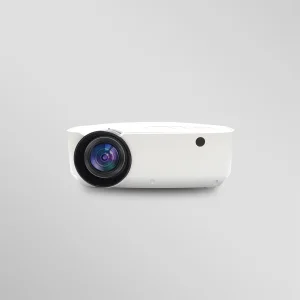
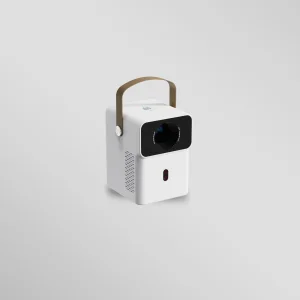
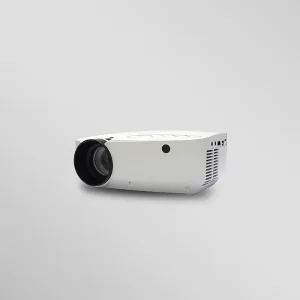
In the rapidly changing hardware ecosystems of the 21st century, the boundaries separating personal communication devices, visual computing systems, and projection hardware are disappearing. The modern screen projector phone represents a pinnacle of miniaturization, merging high-performance computing chipsets with opto-electronic projection modules. As mobile workers, remote educators, and enterprise teams seek tool-less productivity, the ability to turn any flat surface into a high-definition workstation or presentation theater straight from a mobile terminal has transformed from a futuristic concept into a critical operational asset.
For procurement officers, device distributors, and brand aggregators, navigating this highly specialized sector requires a deep understanding of manufacturing processes, opto-electronic components, thermal management constraints, and global supply chains. This document provides an exhaustive overview of the architectural engineering, manufacturing dynamics, and market positioning of screen projector phones, helping procurement teams choose the right partners and obtain realistic pricing quotes from leading manufacturers in the field.
Industrial and enterprise buyers look for screen projector phones for specialized applications rather than typical consumer uses. These specialized devices are deployed across several key sectors:
Sales professionals working in field environments rely on these devices to present marketing materials and product specifications instantly. By removing the need for external HDMI adapters, bulky monitors, or heavy desktop systems, a projector phone lets agents deliver interactive presentations anywhere.
In developing regions, rural classrooms, and corporate training programs, setting up traditional projectors can be difficult due to power issues or poor logistics. An all-in-one projector phone acts as a self-powered teaching station, capable of casting educational programs, videos, and slides for large groups.
During disaster recovery, field operations, and military missions, team members must quickly share geospatial maps and real-time sensor data. Projector-integrated mobile terminals allow rapid field briefings without needing to set up command tents or heavy gear.
The manufacturing roadmap for screen projector phones relies on three main technical pillars: the optical projection technology, the thermal management system, and the power management system.
| Feature Spec | DLP (Digital Light Processing) | LCoS (Liquid Crystal on Silicon) | MEMS Laser Beam Steering (LBS) |
|---|---|---|---|
| Luminous Efficiency | High (Optimized for small batteries) | Moderate (Requires polarized light) | Very High (Sharp brightness output) |
| Contrast Ratio | Excellent (High native contrast) | Moderate (Susceptible to ambient light) | Infinite (Dynamic black range) |
| Physical Envelope | Requires optical lens housing | Extremely compact | Minimal space required (No focus lens) |
| Focus Mechanics | Manual or Auto lens adjustment | Manual optical lens focus | Always in focus (Focus-Free) |
To ensure stable projection performance over long periods, manufacturers use sophisticated cooling systems. Integrating copper-alloy vapor chambers (VC), thermal graphite pads, and heat-sink frames within the chassis helps prevent the projection system from overheating. This ensures the SoC does not throttle, even when processing video and projecting at the same time.
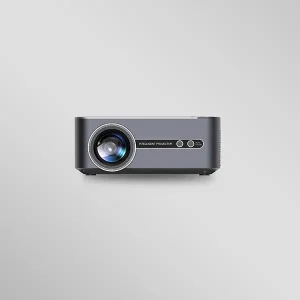
Under the leadership of senior technical specialists, Youxi (Shenzhen) Technology Co., Ltd. delivers global R&D and end-to-end production capacity.
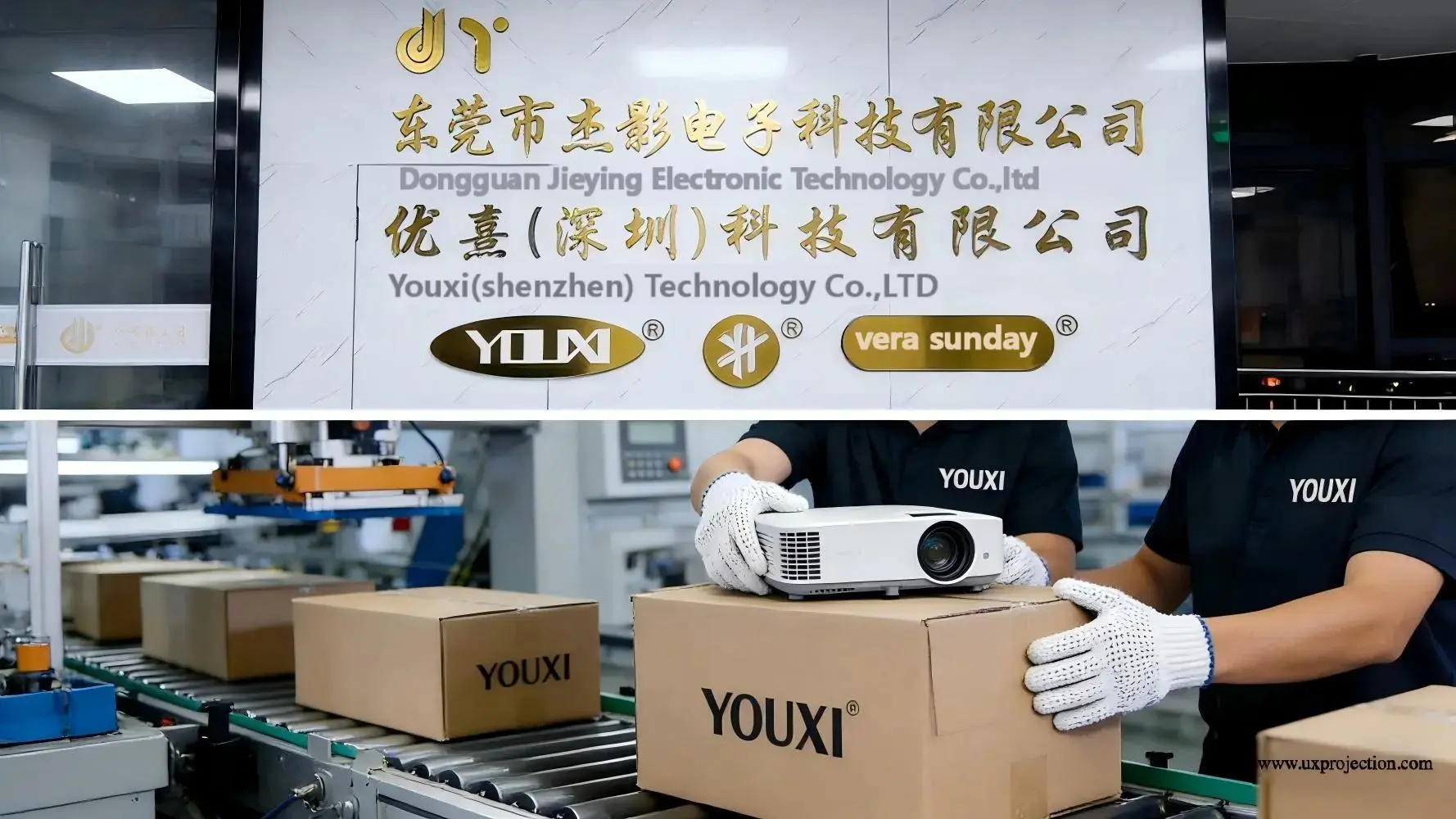
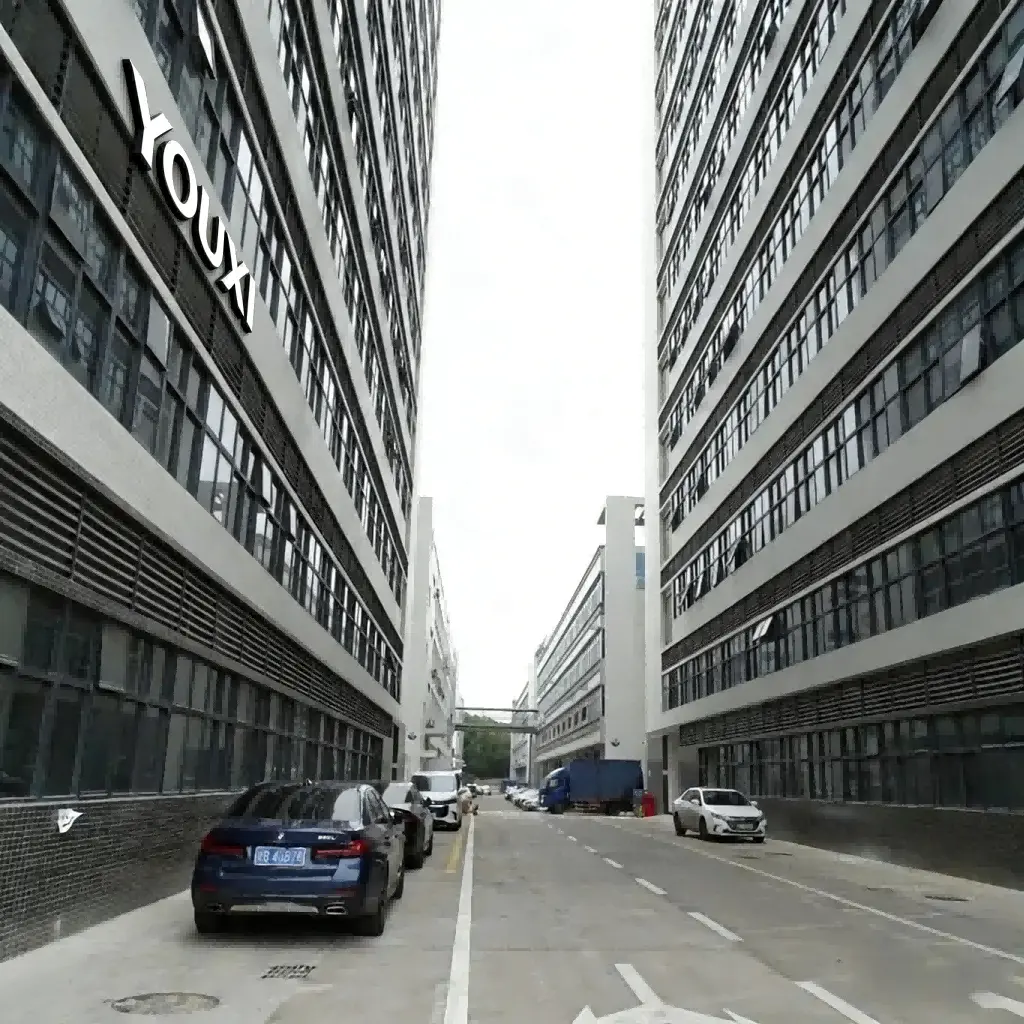
Youxi (Shenzhen) Technology Co., Ltd., founded in April 2021, specializes in the research and development, manufacturing, and integration of intelligent projection systems and wearable smart devices. The company handles the entire product lifecycle—from R&D and precision assembly to quality assurance—ensuring full compliance with international standards at every stage, from raw material procurement to finished product delivery. Committed to sustainable operations, Youxi integrates energy-efficient design, eco-conscious material selection, and waste-reduction practices into its business model, contributing to green manufacturing initiatives.
Headquartered in Shenzhen—a leading innovation hub in Southern China—the company benefits from strategic proximity to the Hong Kong Port, with a travel time of approximately 40 minutes. This allows for fast, efficient international logistics and shipping routes worldwide.
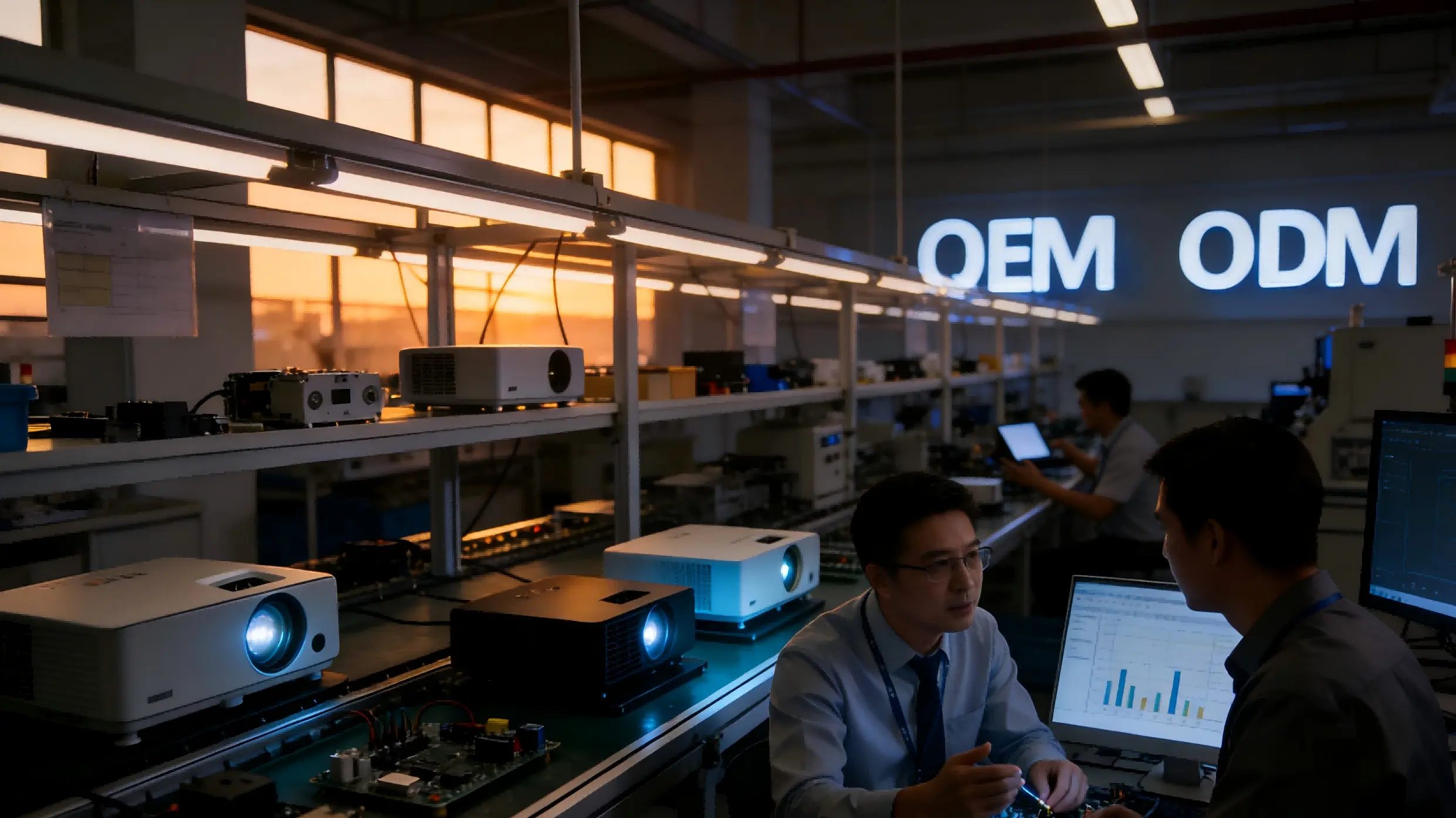
To support scalable production, Youxi operates a dedicated assembly facility spanning approximately 1,000 square meters in Fenggang Town, Dongguan City (a 25-minute drive from the Shenzhen headquarters). This facility currently employs around 100 professionals and maintains a monthly production capacity exceeding 30,000 units. Its robust quality management system, certified supply chain, and vertically integrated operational framework ensure consistent product reliability and timely delivery.
Youxi offers comprehensive service solutions, including branded product development, OEM/ODM customization, and material-specified manufacturing (MSM). We also actively pursue strategic partnerships through authorized distribution and joint venture models.
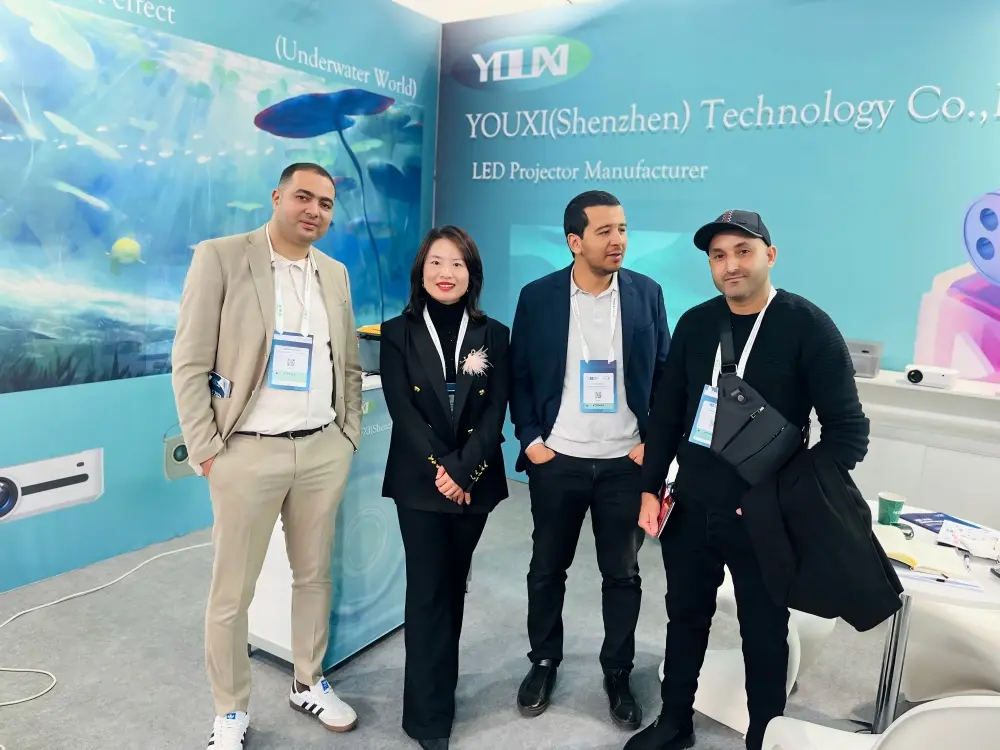
Manufacturing high-grade, reliable portable projection units and screen projector phones demands meticulous care. Our production lines operate under strict quality control standards to ensure high yield rates and optimal performance for global buyers.
The mold and injection molding workshop is located next to our factory, equipped with sophisticated digital machines above conventional market standards to ensure a good foundation for each product.
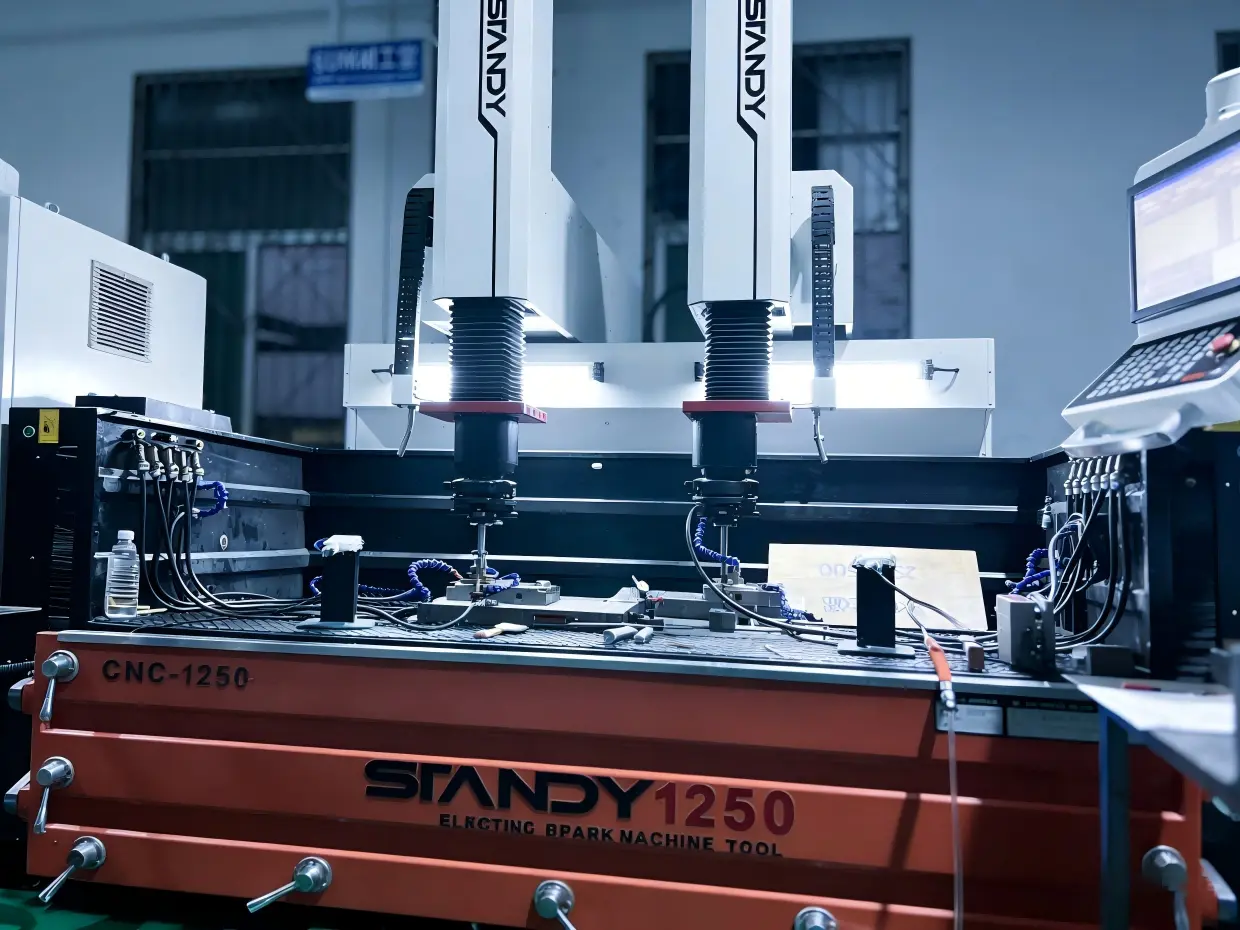
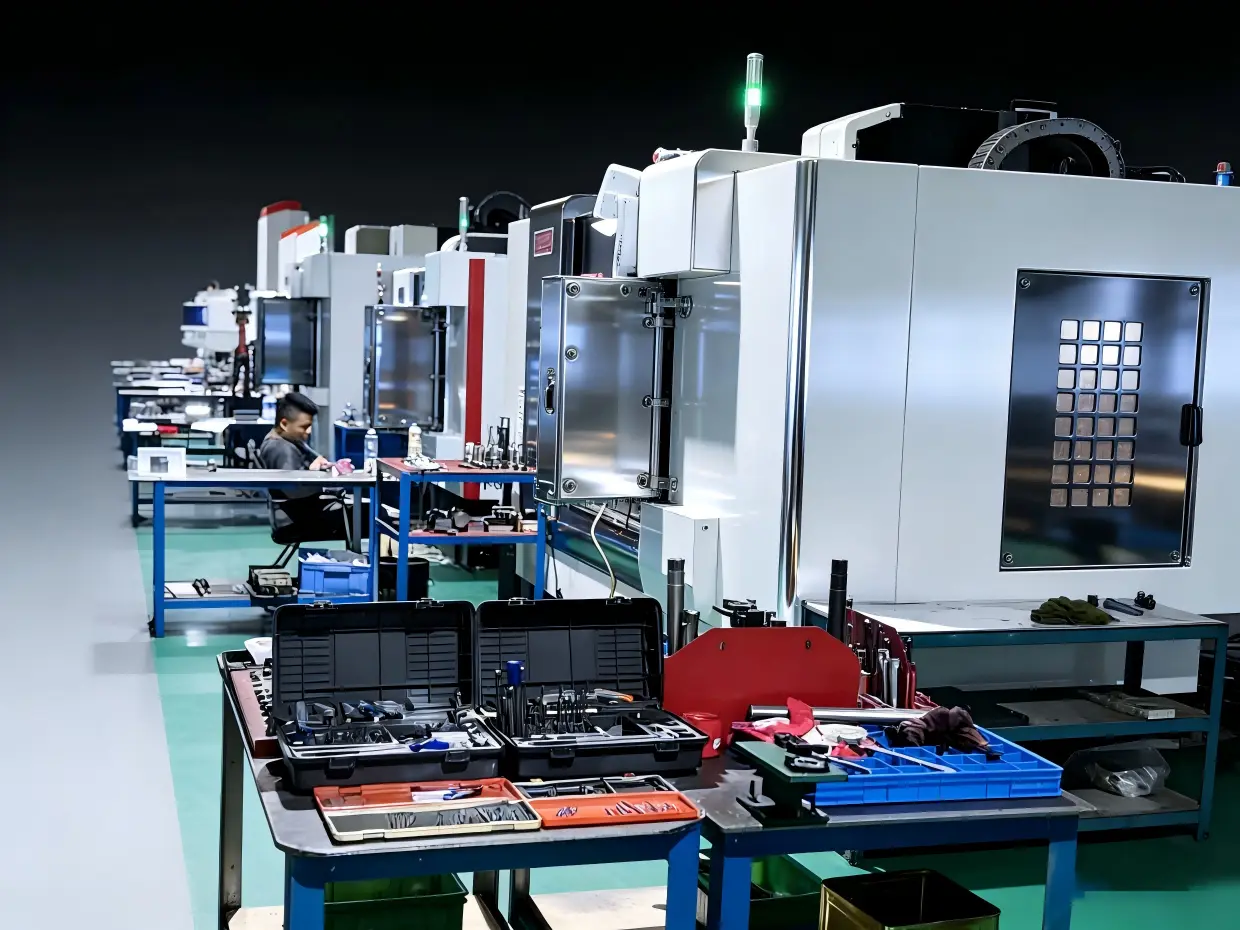
Covering an area of 4000 square meters. The factory is equipped with production, injection molding, assembly, and testing workshops with large volume. After recent large-scale adjustments, we maintain more than 100 qualified assembly workers distributed across departments. Our monthly production and assembly capacity is up to 50,000 units.
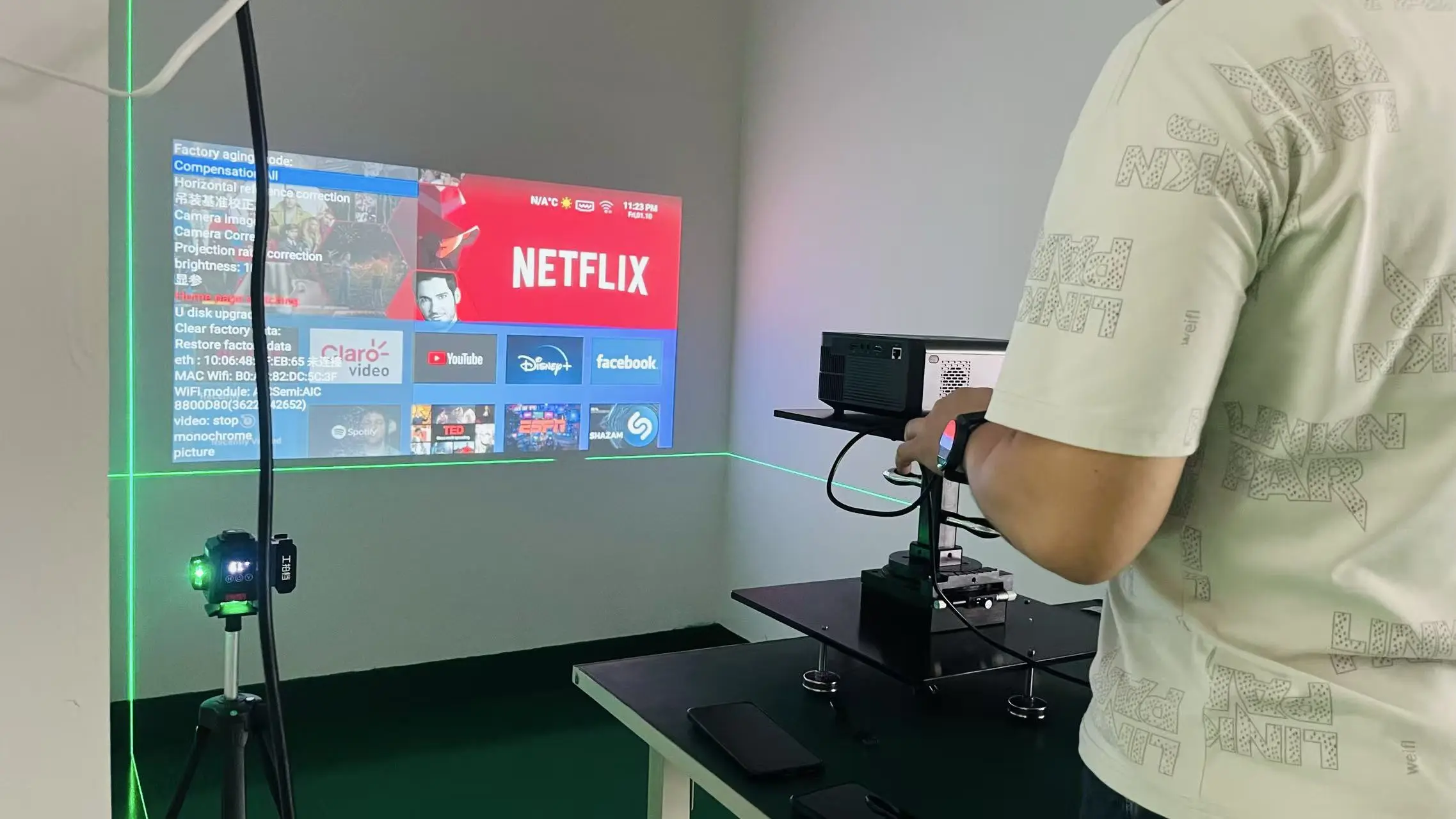
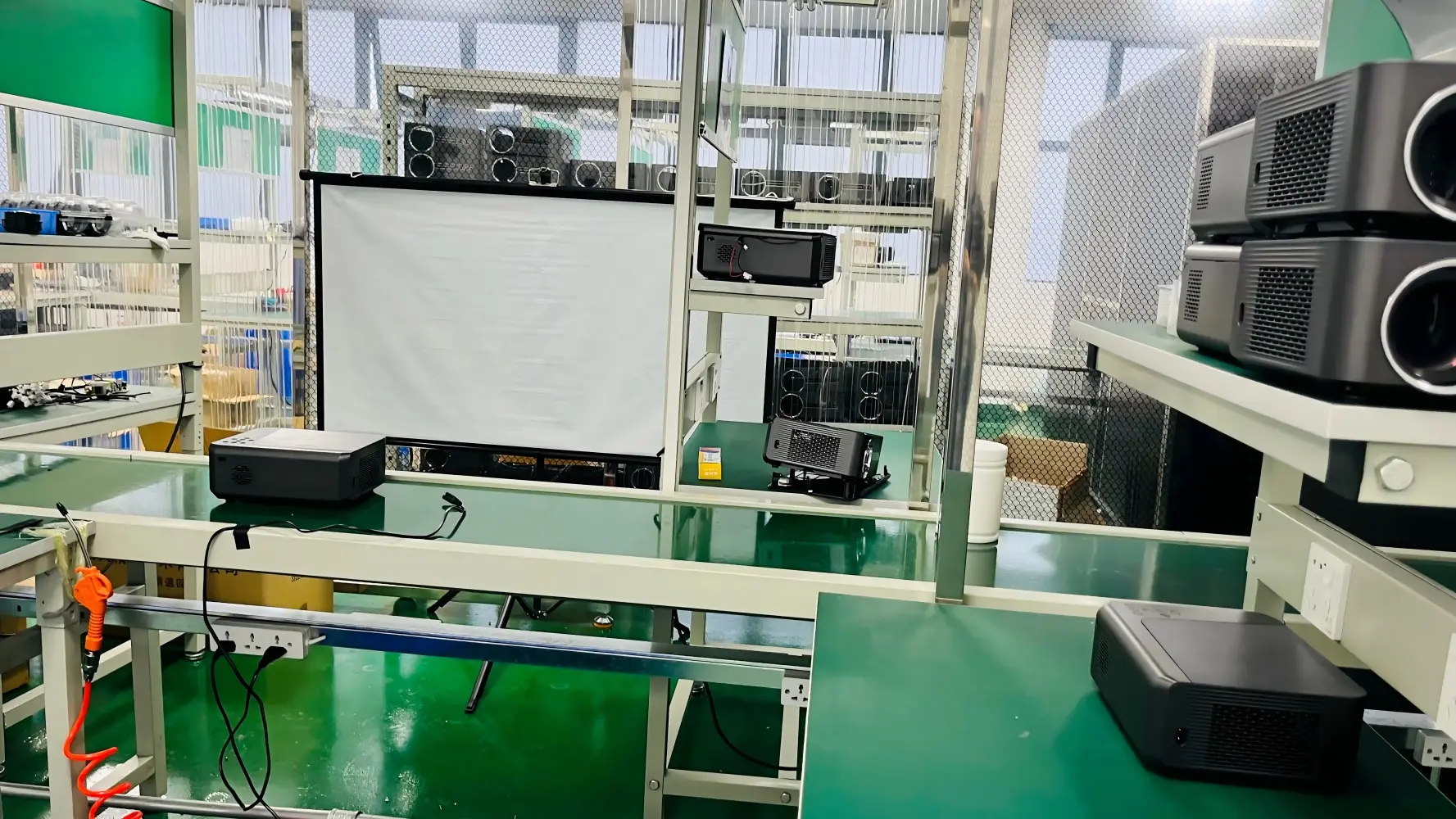
To ensure the performance of each machine and minimize post-sale defects, we utilize 12 specialized test rooms. Our quality inspectors test incoming material, perform the first inspection after assembly, and run sample inspections before shipment.
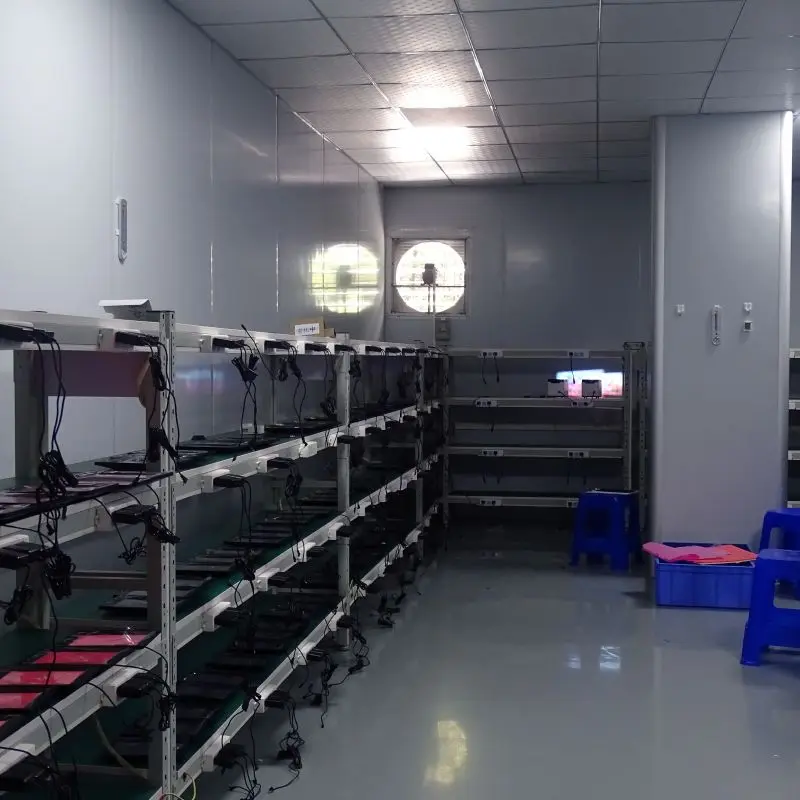
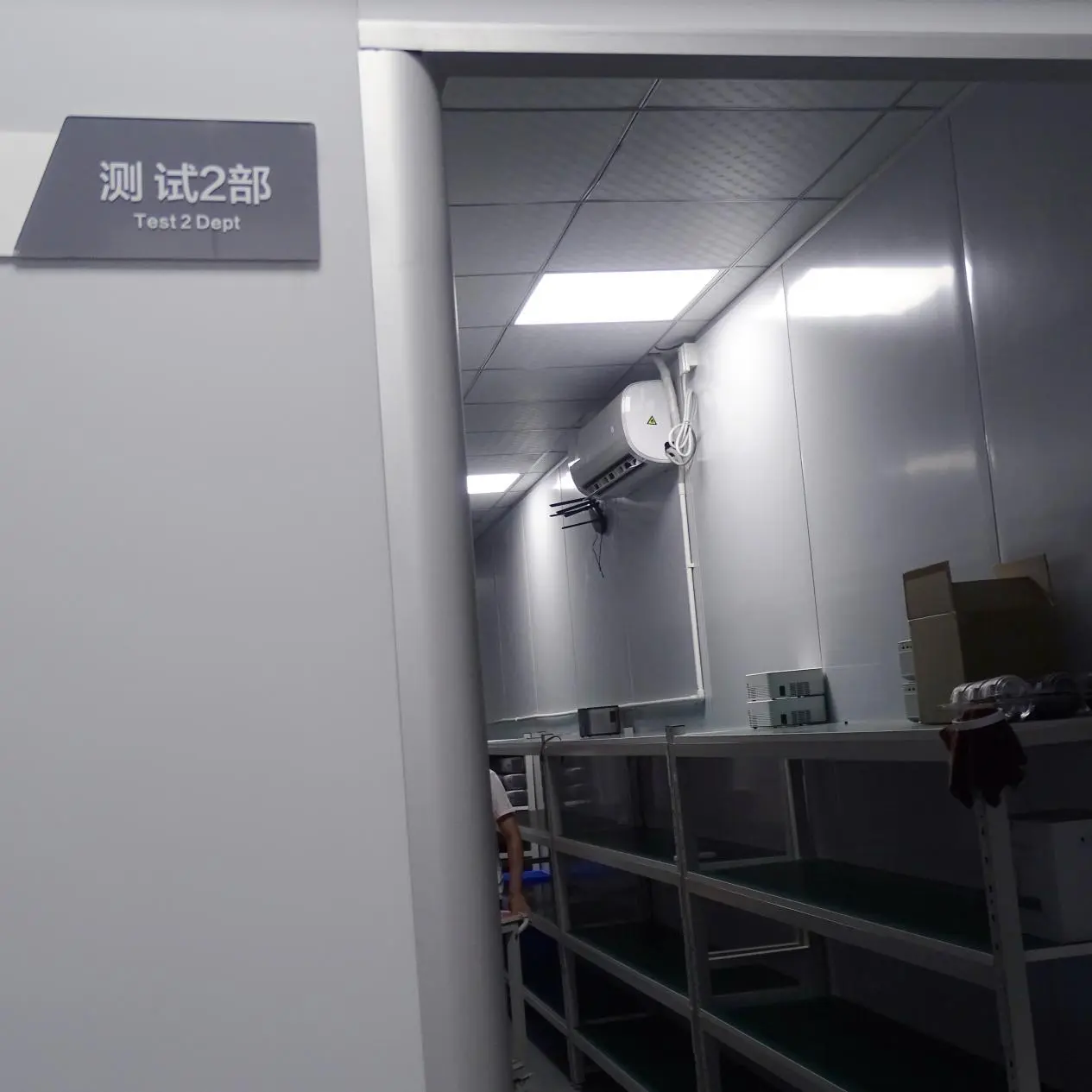
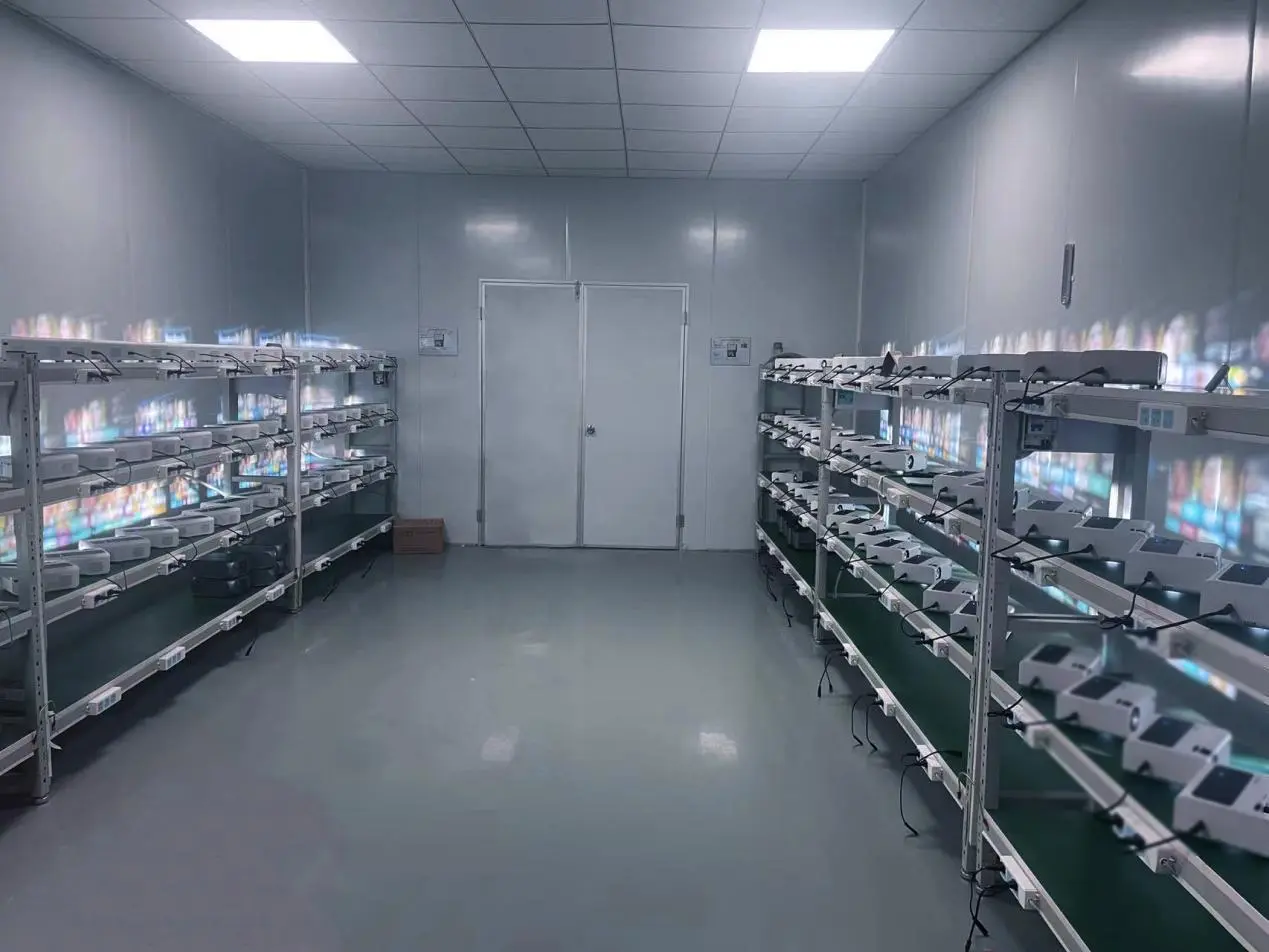
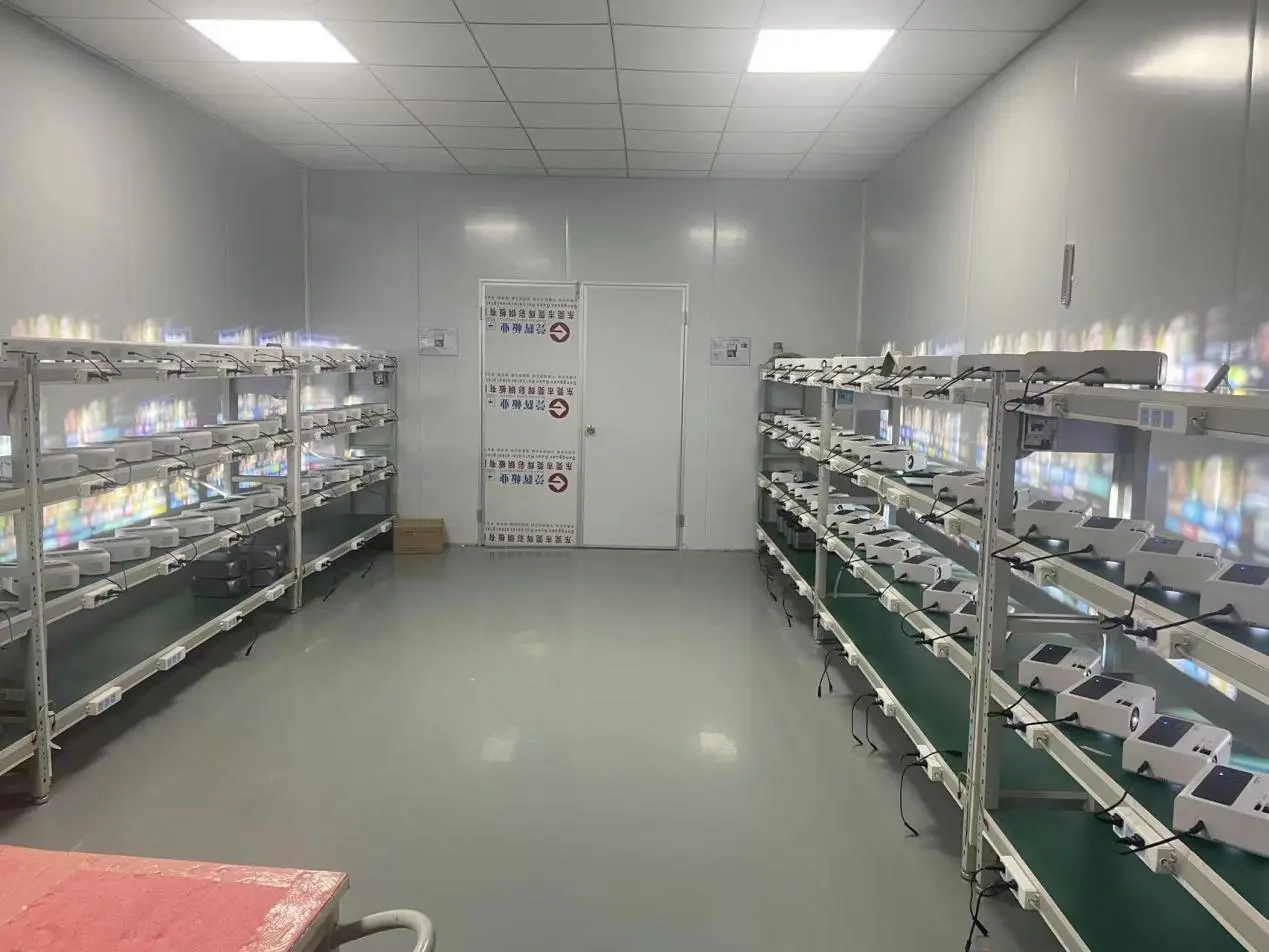
The aging test room is located next to the functional test room to improve efficiency and reduce errors. This setup allows at least 200 machines to run aging tests simultaneously under load.
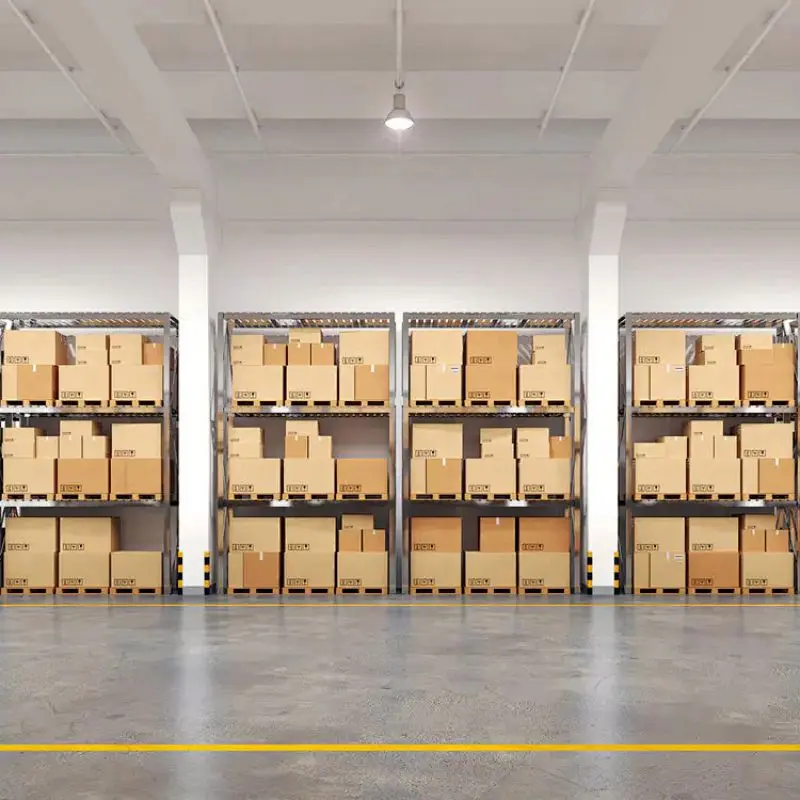
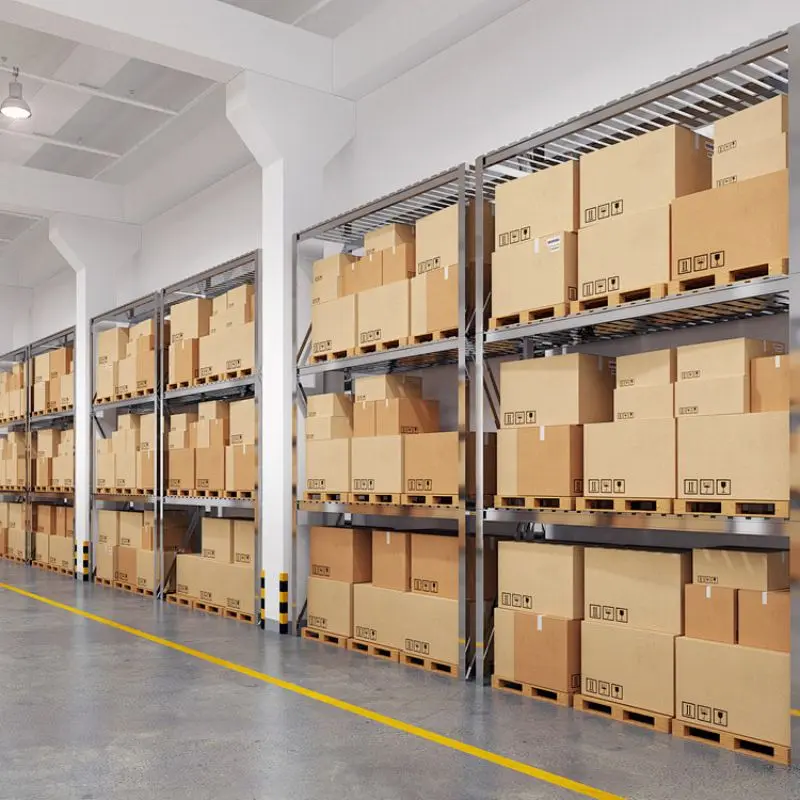
Our finished product warehouse covers a 300 square meter area, located next to the packaging line for fast transit. This proximity ensures quick hand-offs from final packaging to secure pallet wrapping, prepping shipments for sea freight or air freight export.
Securing factory quotes for custom hardware runs requires tracking several technical parameters. Standard consumer smartphones follow off-the-shelf specs, but micro-projection hardware demands custom configurations based on target light environments and battery limitations:
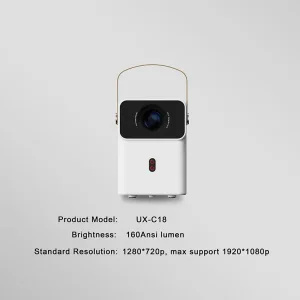
We support deep customized configurations, including optical lens modifications, customized throw ratios, specific lumens configurations (ranging from 100 to 400 ANSI Lumens for compact form factors), RAM/ROM variations, and custom startup logos. This flexibility helps brands align the product with their price points and performance needs.
For business deployments, safety and security are critical. We provide customized Android ROMs with pre-installed corporate software, locked settings, and secure VPN routing. The projection display software can also be modified to include quick wireless mirroring features like Miracast, AirPlay, and Chromecast.
All shipping units meet global compliance directives to ensure hassle-free customs clearance and domestic distribution:
Technical and logistics answers for procurement specialists and business buyers.
Explore factory direct quotes, customized interfaces, and advanced specifications for global business markets.
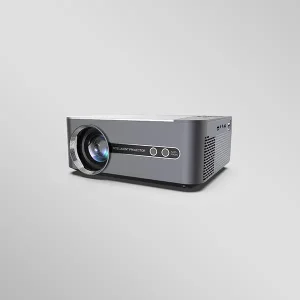

 Youxi projection