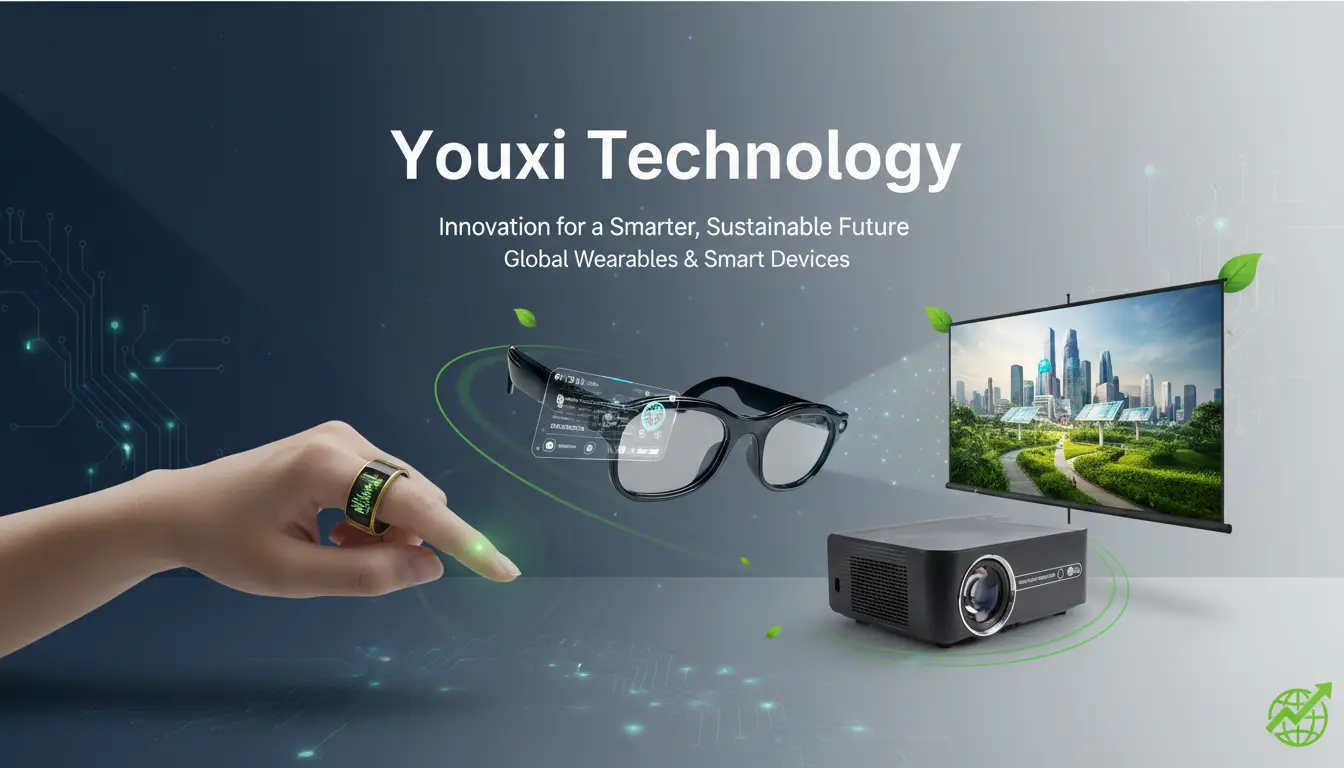
 Youxi projection



Executive Whitepaper: Strategic Smartring OEM/ODM Landscape & Global Sourcing
In the rapidly transforming landscape of wearable technology, the smart ring has emerged as the frontier of personalized, non-intrusive health tracking and smart control. Unlike traditional smartwatches, the finger offers a significantly higher vascular density, allowing advanced photoplethysmography (PPG) sensors to capture highly accurate heart rate, SpO2, heart rate variability (HRV), and vascular indices. For global brands, distributors, and enterprise buyers, partnering with the right smartring factory is not just a procurement transaction—it is a long-term alignment of core technical competencies, industrial design precision, and supply chain scalability.
This whitepaper details the architectural layers of smart ring manufacturing, explores how Chinese manufacturing hubs dominate the technological value chain, and offers concrete insights on how to qualify a factory's micro-injection, PCB assembly, firmware compatibility, and regulatory credentials. By understanding these dimensions, enterprises can mitigate custom integration risks, optimize product performance, and capture market share in this booming sector.
Micro-Sized Engineering
Smart rings consolidate flexible PCBs, high-density solid-state batteries, microcontrollers, and multi-wavelength PPG sensors into a space less than 3mm thick. Ensuring signal integrity requires advanced structural design.
Biocompatibility & Materials
Direct skin contact requires non-allergenic, lightweight materials like aerospace-grade Titanium alloys or medical zirconia ceramics. Outer surfaces must handle PVD coating for optimal scratch resistance.
Energy Optimization
Squeezing a battery with 15-20mAh capacity requires highly customized low-power firmware. Proprietary algorithms run on Bluetooth Low Energy (BLE) microcontrollers to yield 5 to 7 days of continuous monitoring.