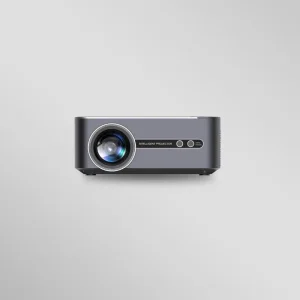
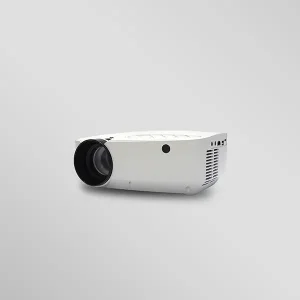
Explore our top-tier, smart projection setups integrated with local streaming compliance, native high-definition display performance, and optimized pricing architecture tailored to Western Japan's procurement teams.
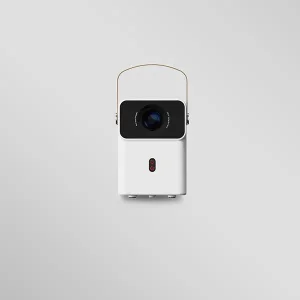
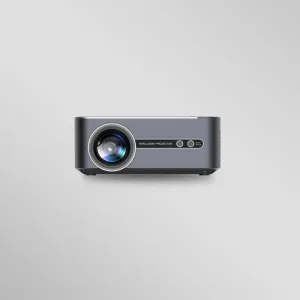
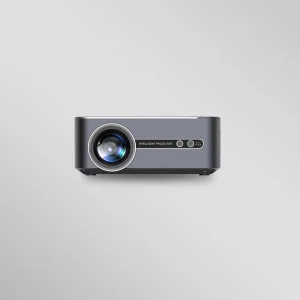
Osaka, recognized as the commercial heartbeat of Western Japan, is experiencing a rapid structural upgrade in digital infrastructure. Traditional projection systems are being quickly phased out across enterprise offices, educational institutions, retail showrooms, and the booming hospitality sector. Smart projection devices featuring embedded 1080P Android architectures have emerged as the standard replacement. Unlike outdated lamp-based systems, these smart projectors eliminate the need for external PC systems, operating instead on robust, localized Android applications. This allows seamless cloud connectivity, local Japanese streaming capability, and lower overall maintenance overhead.
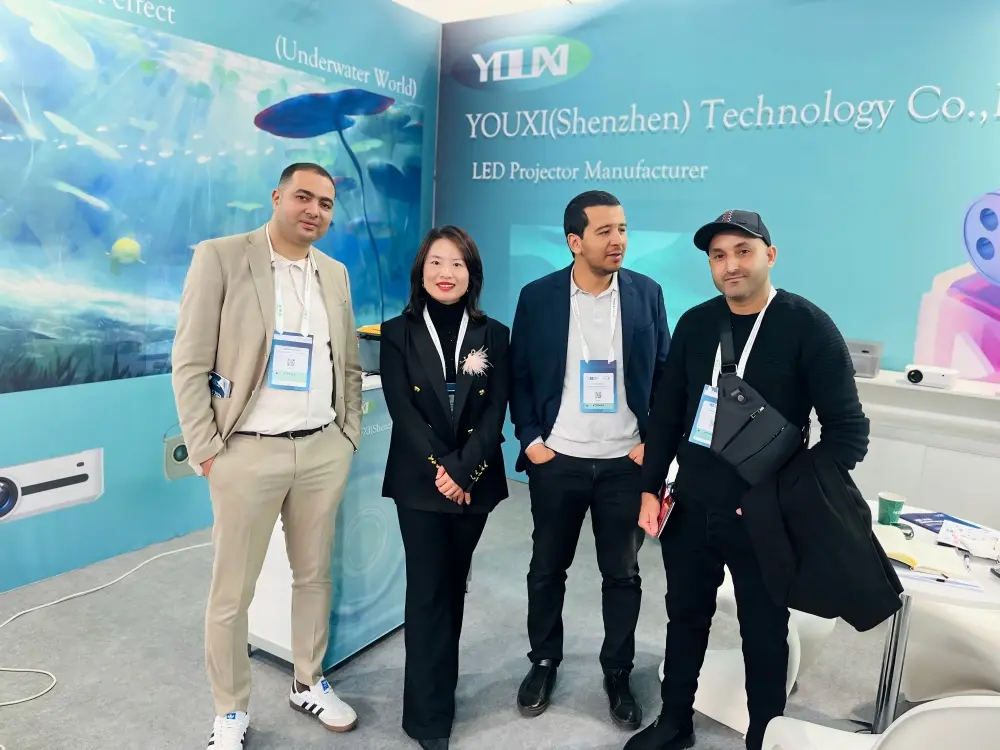
In response to these demands, Youxi (Shenzhen) Technology Co., Ltd. provides direct manufacturing solutions that bridge the gap between high-capacity production in Shenzhen/Dongguan and the strict quality expectations of the Japanese market. Our custom configurations comply with Japan's technical requirements, providing competitive cost-per-lumen value and reliable hardware lifetimes.
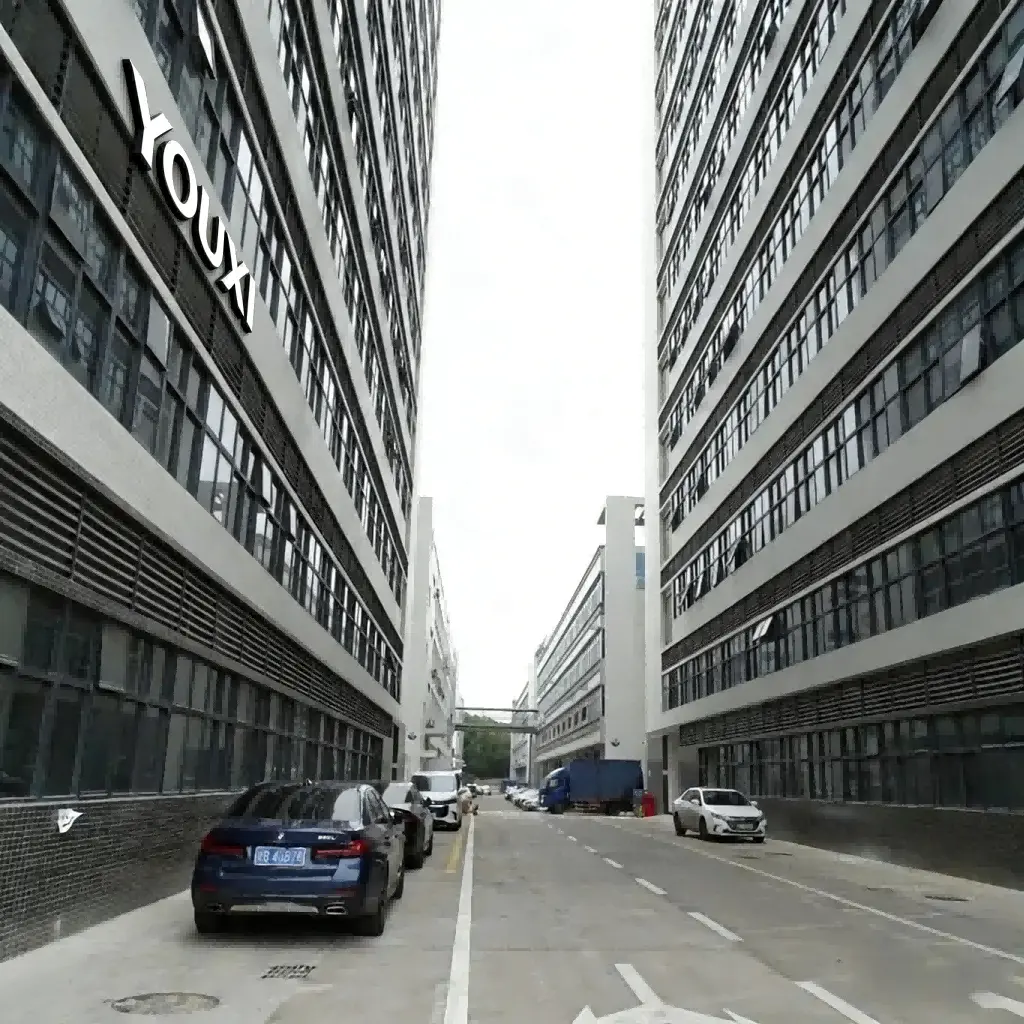
Founded in April 2021, Youxi (Shenzhen) Technology Co., Ltd. specializes in the design, engineering, and manufacturing of smart projection products and wearable display hardware. Operating out of Shenzhen, a global hub for hardware innovation, our headquarters manages design, component sourcing, and international commerce. Our manufacturing is situated in Fenggang Town, Dongguan, where a 1,000-square-meter facility with over 100 experienced line workers handles assembly. The setup keeps logistics efficient, with the Dongguan facility located just a 25-minute drive from Shenzhen HQ and approximately 40 minutes from the Hong Kong Port, streamlining export pathways to Osaka Port and Kansai International Airport (KIX).
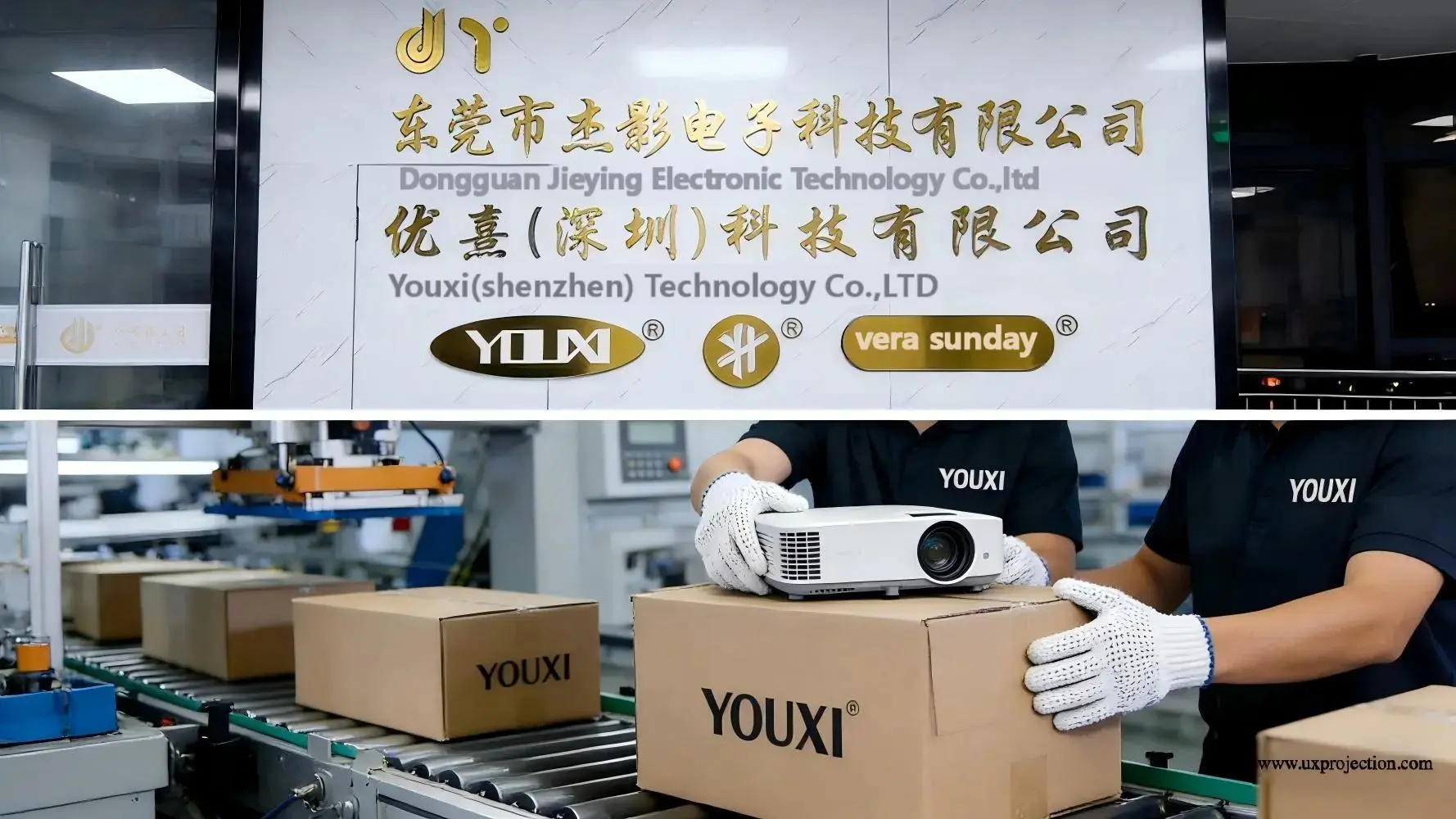
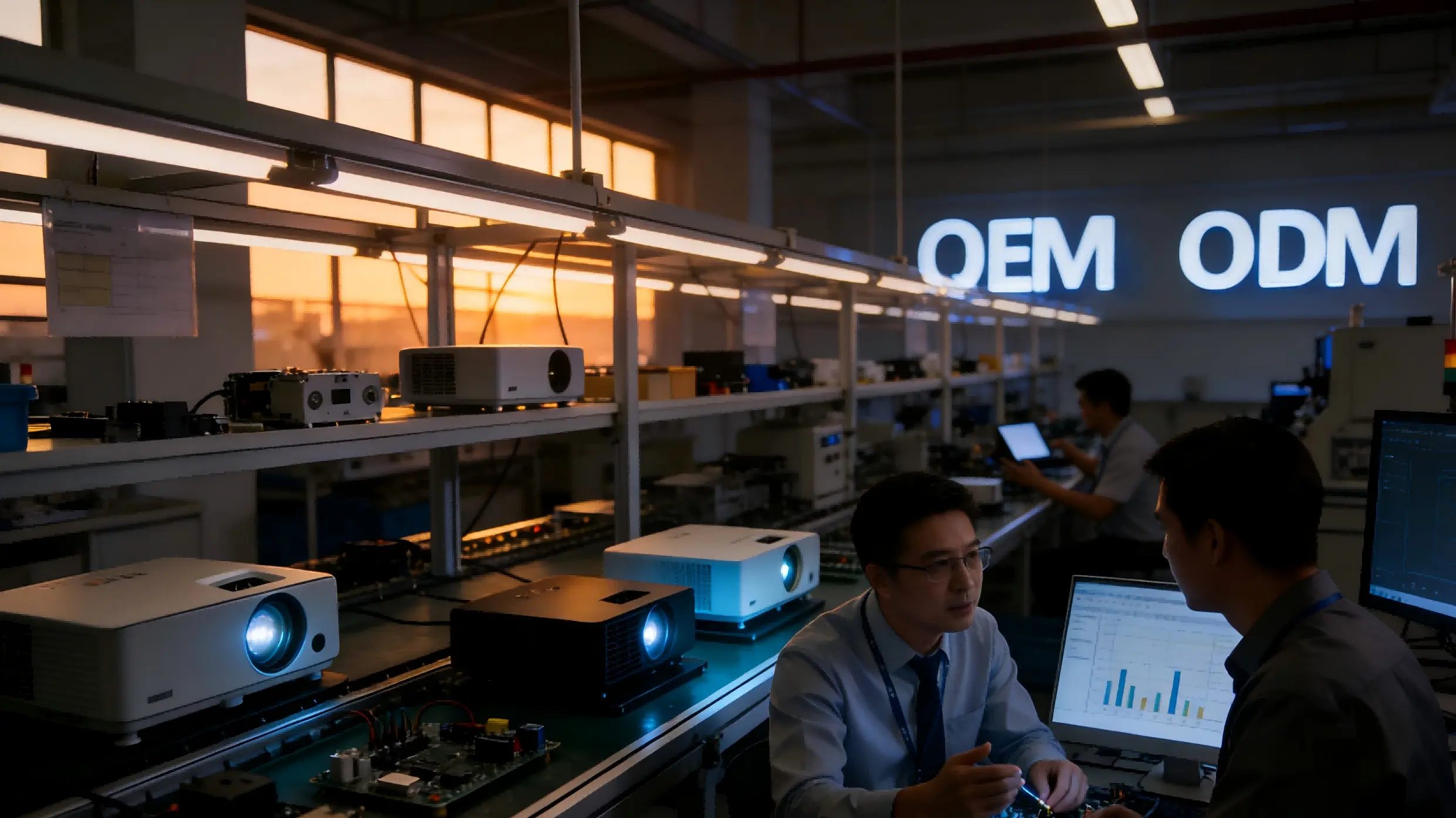
"By managing both mold injection, assembly, and multi-stage aging tests internally, we control product quality from design files to final packaging. This structure allows us to offer OEM/ODM partners in Osaka customizable firmware and tailored product packaging."
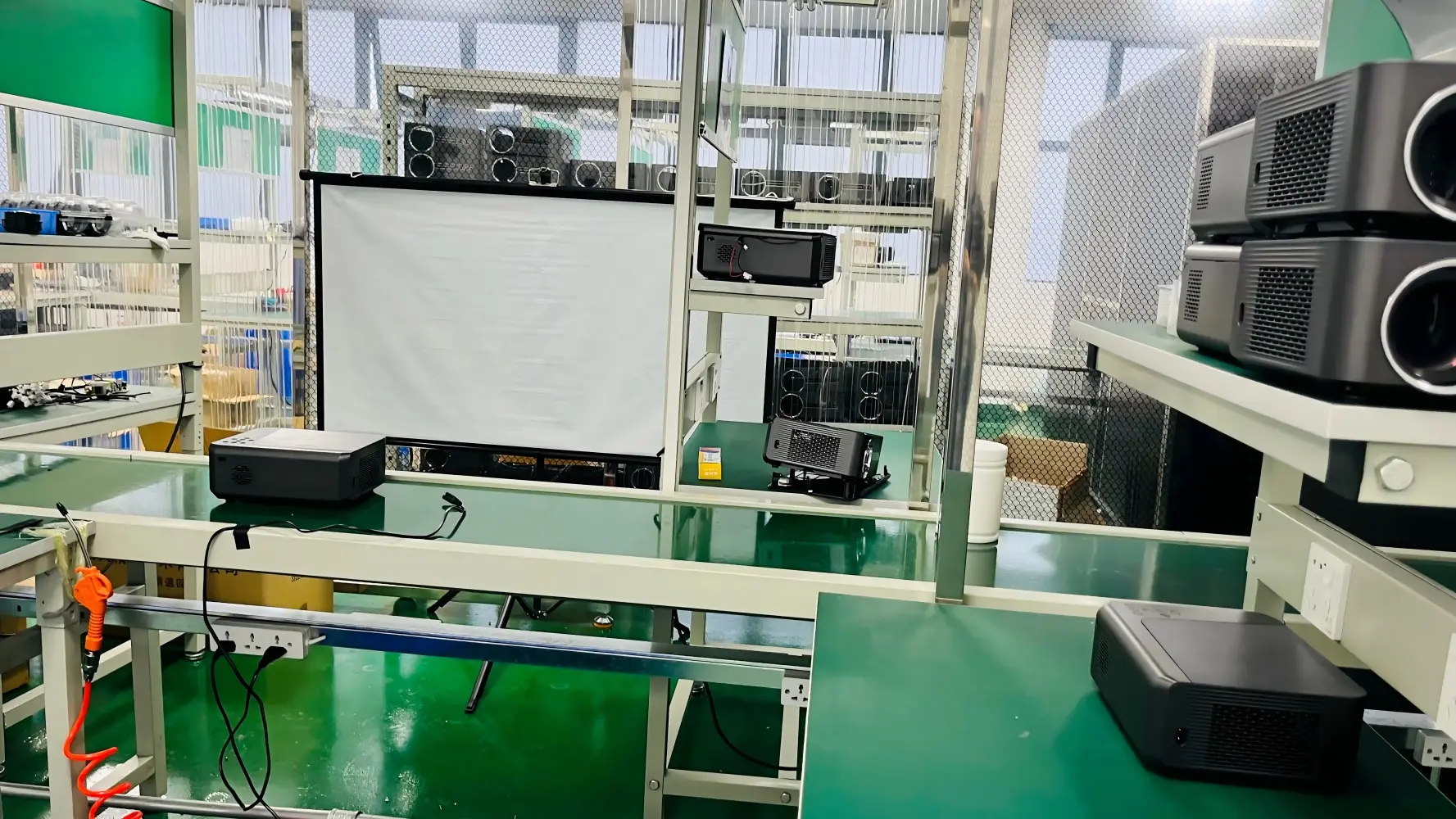
Our equipment and engineering teams support a monthly production and assembly capacity of up to 50,000 units. The facilities operate under 5S standards, ensuring that optical engines are assembled in clean environments to prevent internal dust spots on projection screens.
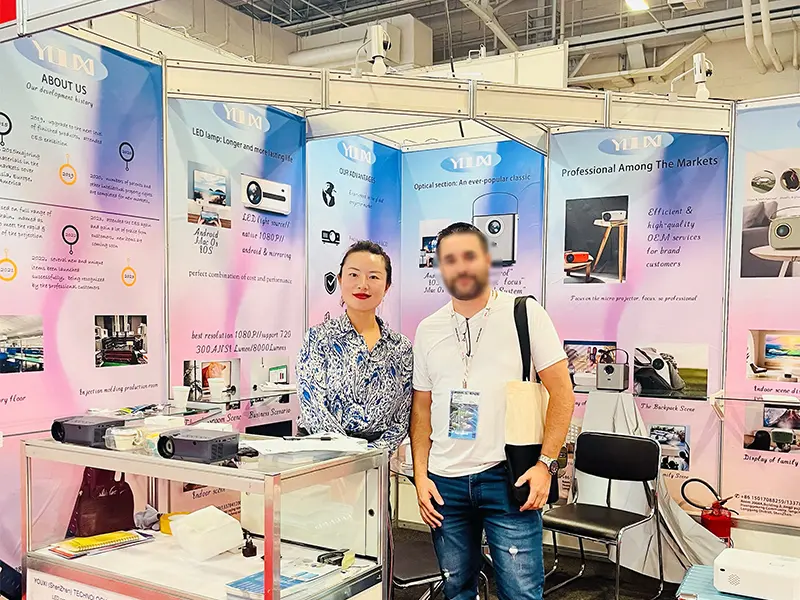
Providing reliable hardware to the Japanese market requires strict quality controls. Our production line is organized into specialized departments to ensure consistent product outcomes.
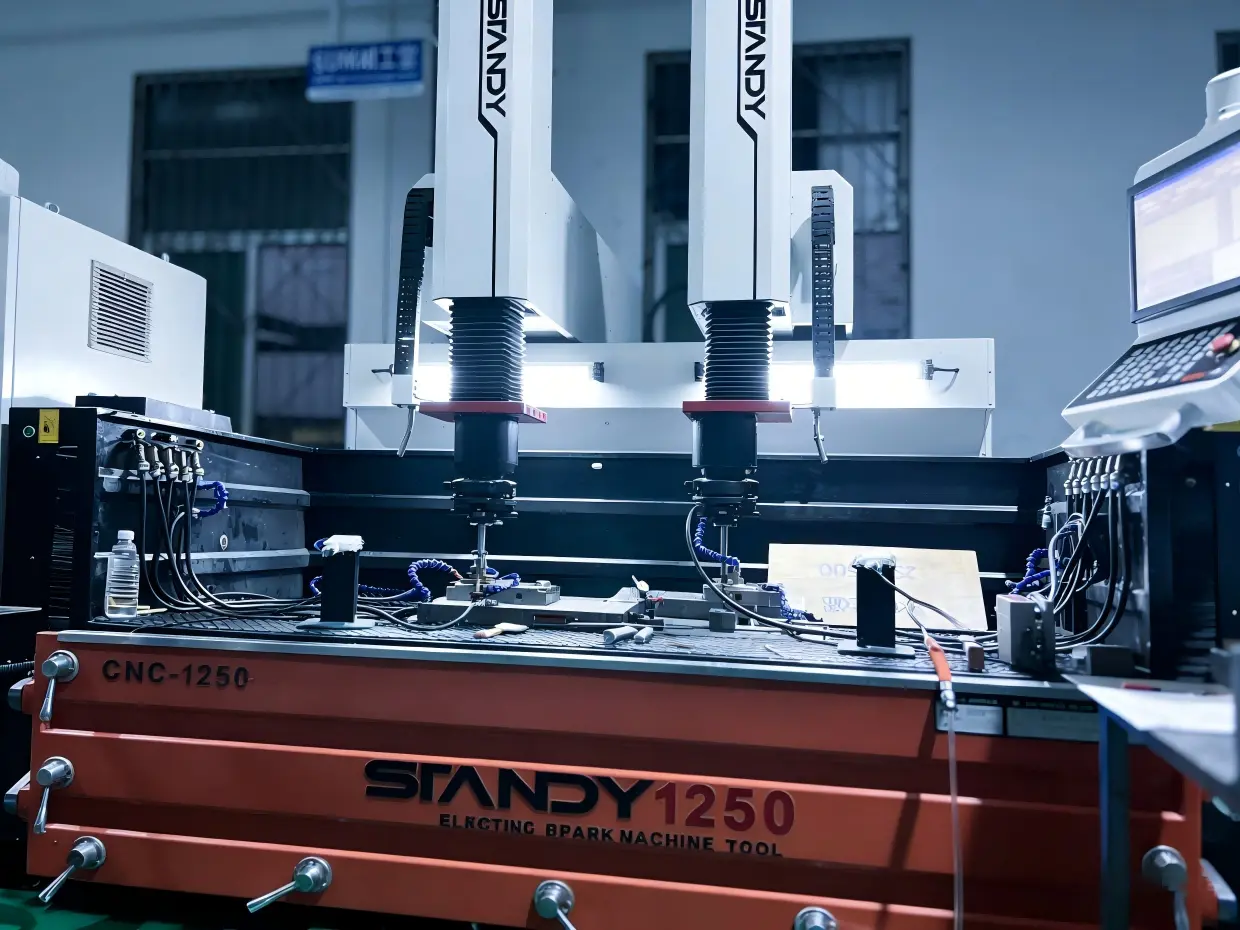
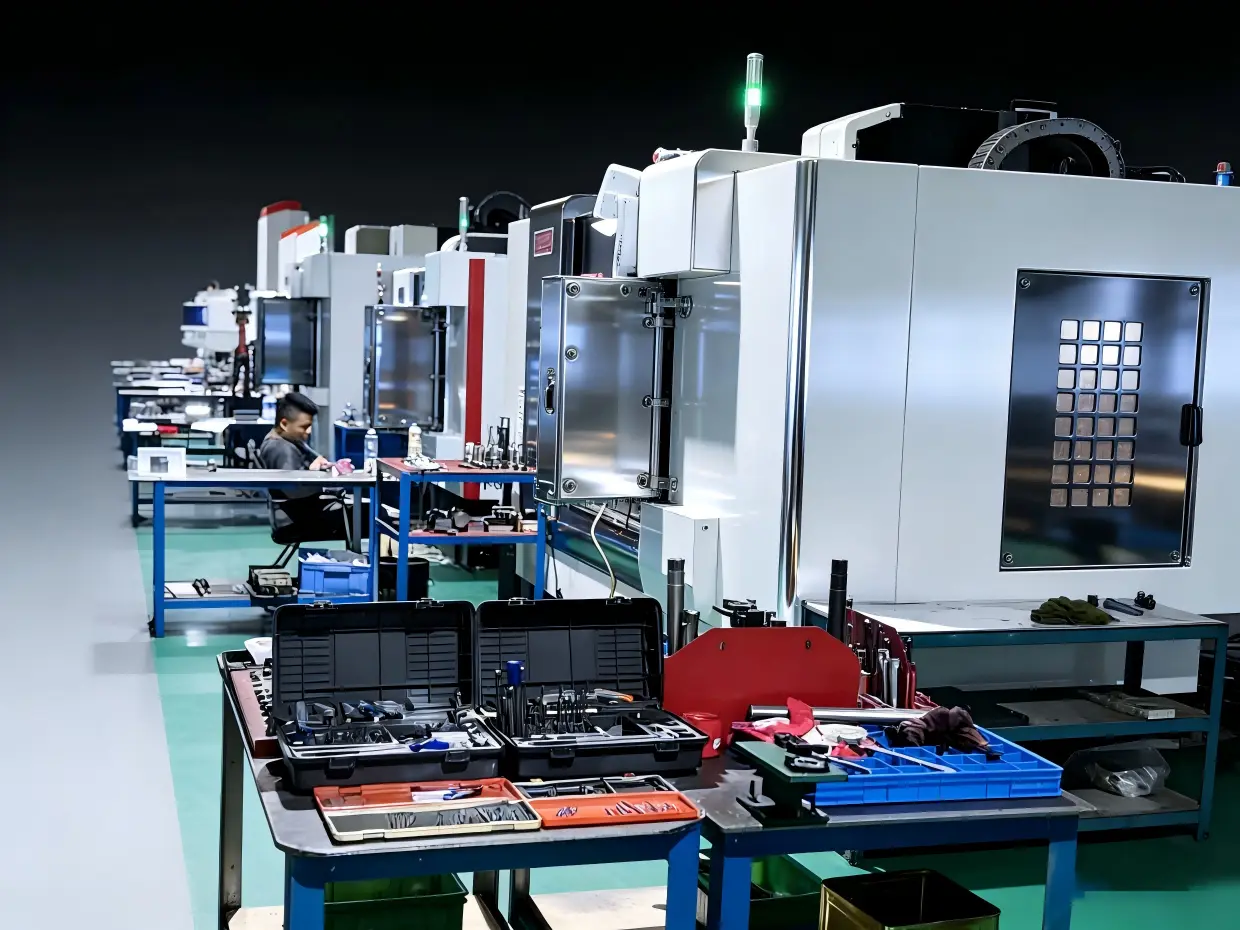
The injection workshop is located adjacent to our main assembly hall, utilizing high-precision machinery to produce consistent housing shells and structural components.
Conducted in a clean environment to ensure the optical path remains clear. The 4,000-square-meter facility houses over 100 technicians on structured assembly lines.
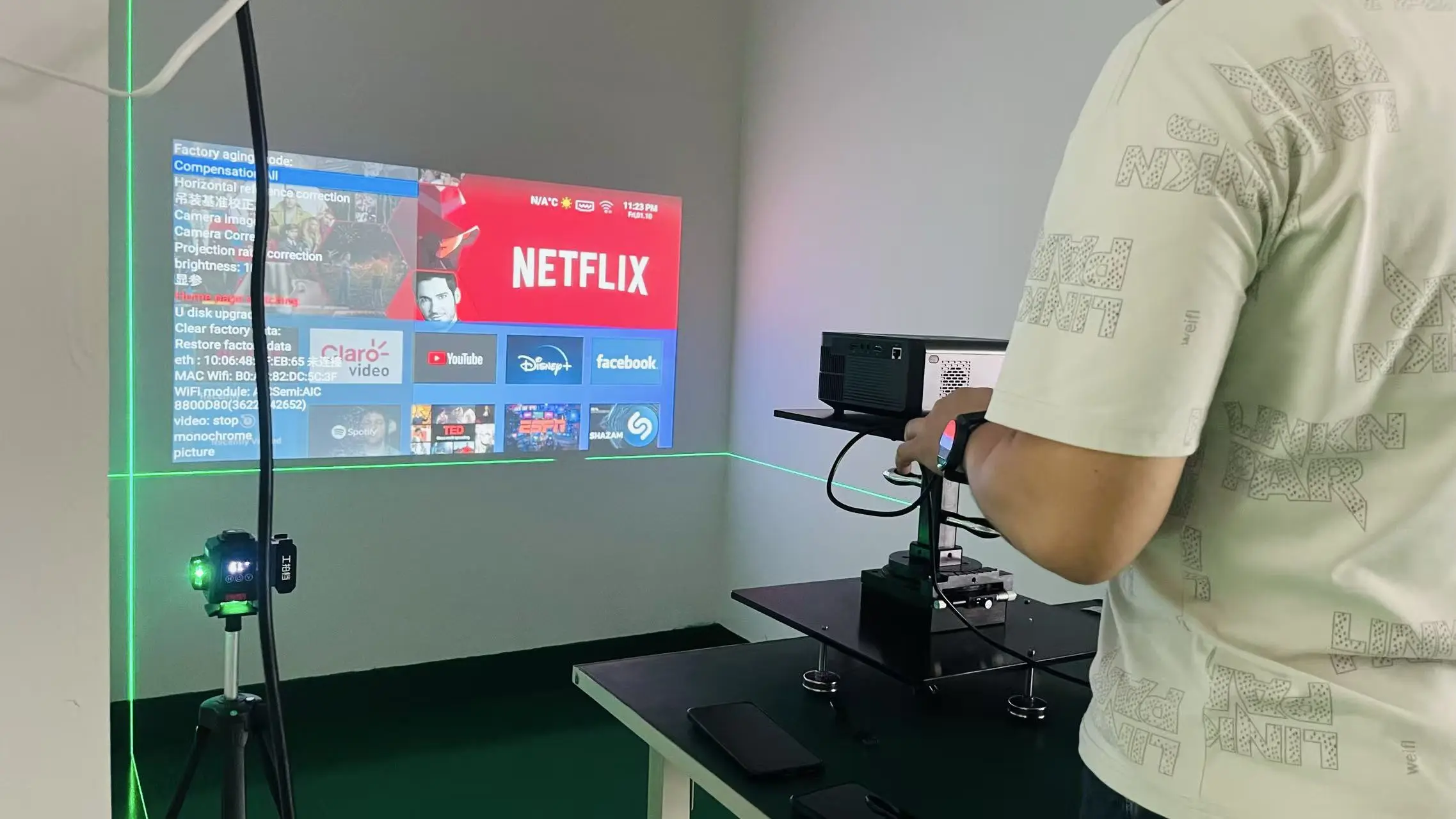
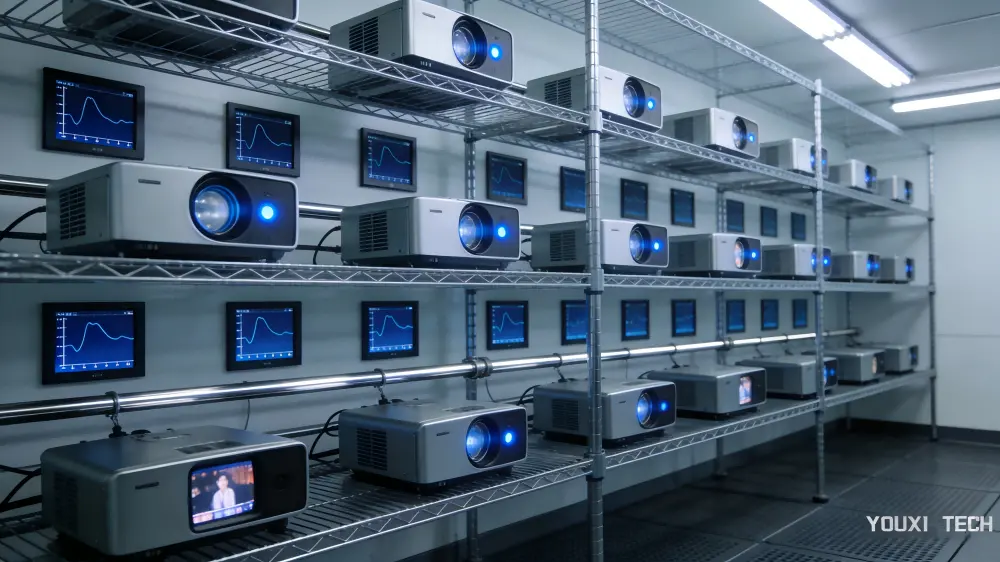
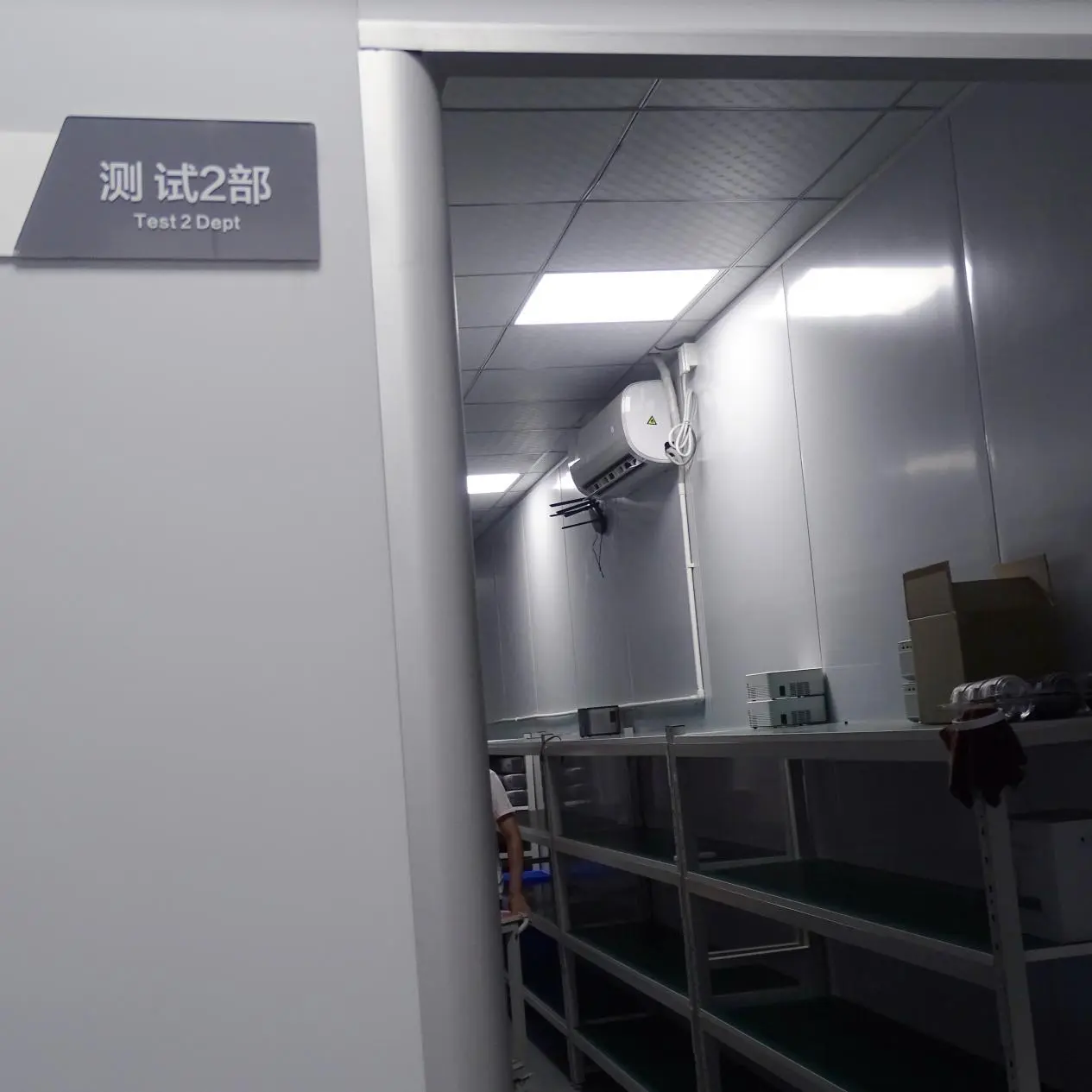
Equipped with 12 testing rooms where QC inspectors run initial optical tests, input signal validation, and sample tests on incoming raw materials.
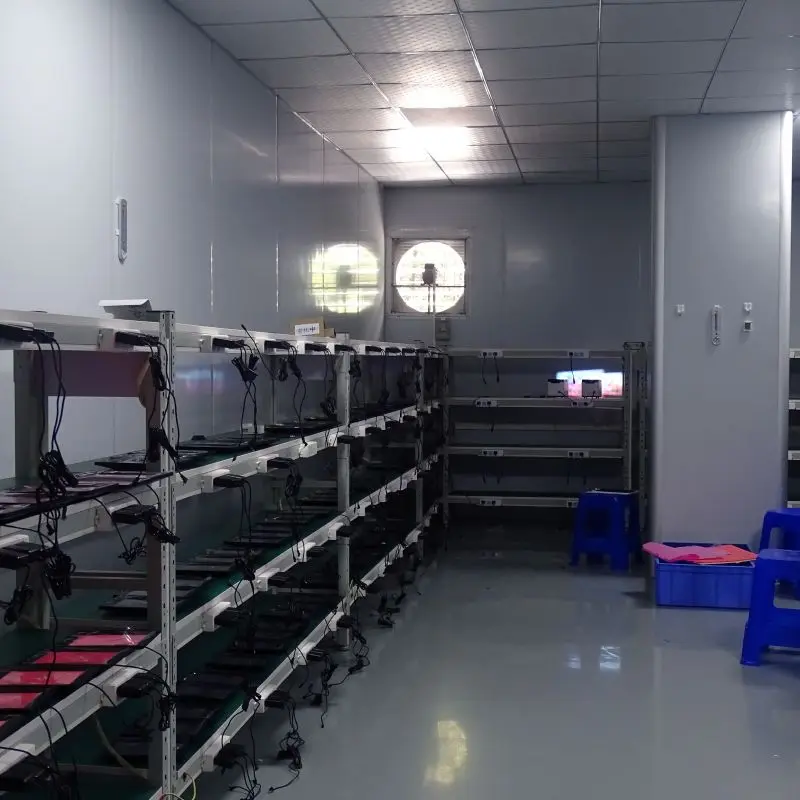
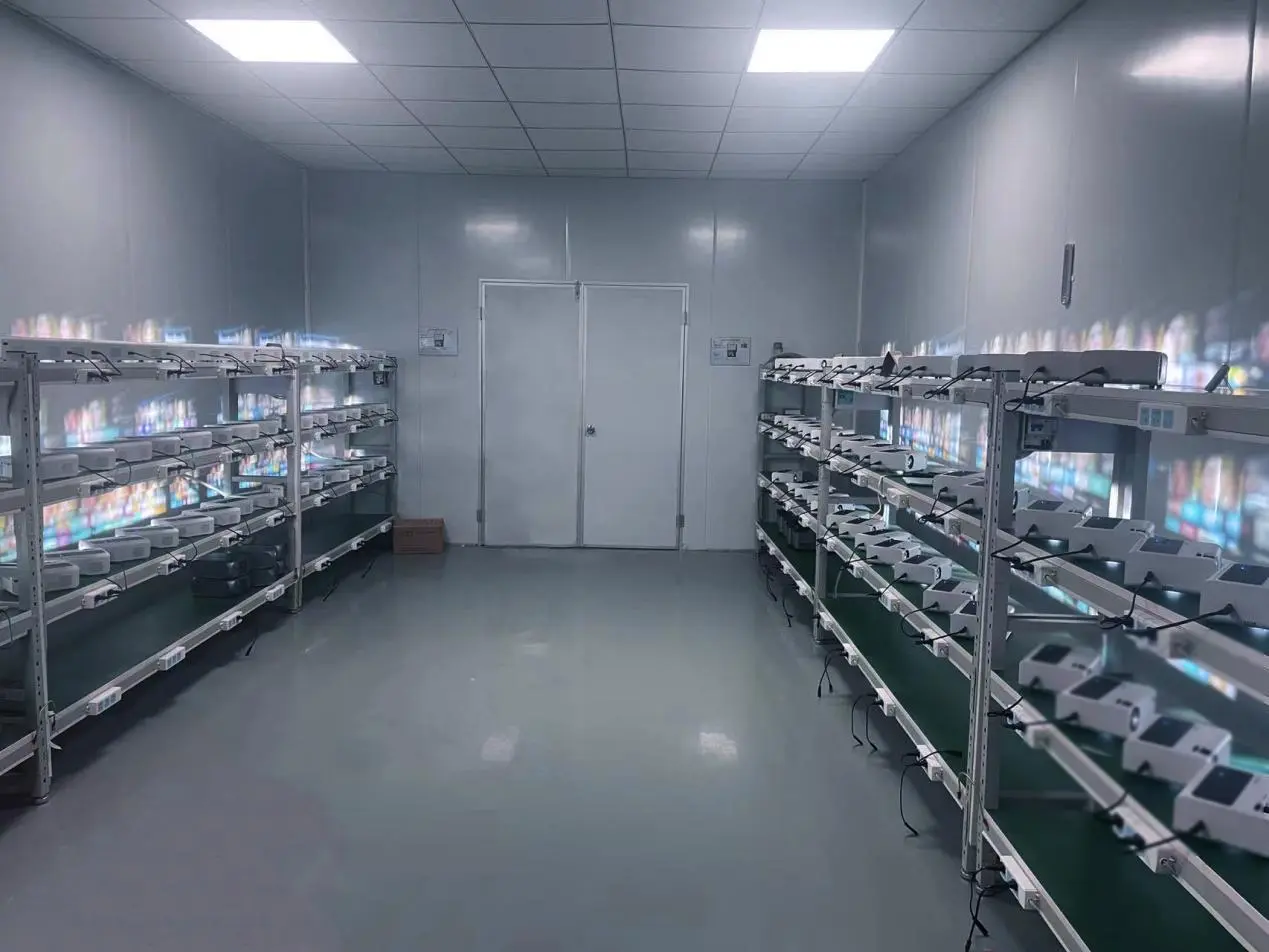
Every unit undergoes continuous thermal aging tests (handling up to 200 devices simultaneously) before entering our 300-square-meter warehouse for final packaging.
When selecting projection technology for commercial spaces in Kansai, matching hardware specifications with the installation environment is essential. The table below compares performance categories for our main designs:
| Projector Category | Ideal Application Scenario | Key OS / Chipset | Brightness Range | Customization Limits |
|---|---|---|---|---|
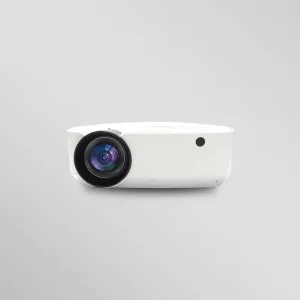
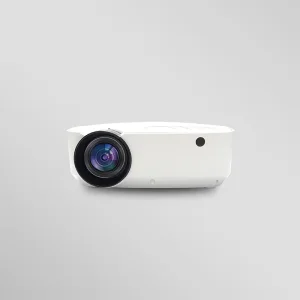
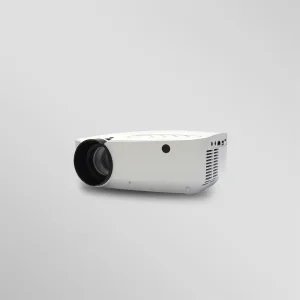
| Native 1080P Smart LCD | Corporate Meeting Rooms, Educational Classrooms | Android 9.0 / 11.0 AOSP | 350 - 600 ANSI Lumens | Boot animation, pre-installed enterprise APKs |
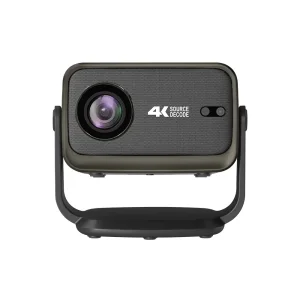
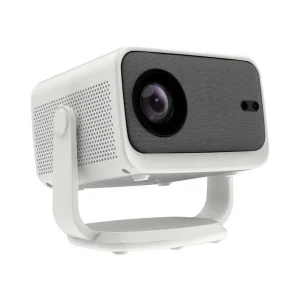
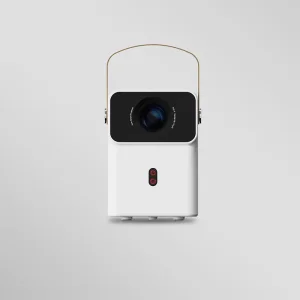
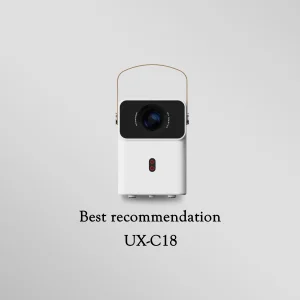
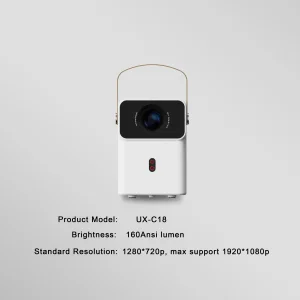
| Ultra-Portable Mini Projectors | Co-working Spaces, Boutique Hotels, Outdoor Pop-ups | Android + Wireless Mirroring | 200 - 300 ANSI Lumens | Custom exterior colors, silkscreen logo branding |
| Native 4K & Google TV Modules | Premium Boardrooms, Public Signage Exhibits | Google TV Licensed / Widevine L1 | 800+ ANSI Lumens | Custom system ROM, remote-control key mapping |
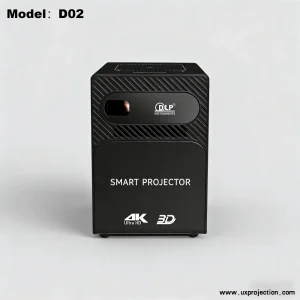
| Palm-sized DLP Battery Units | Mobile Sales Presentations, Temporary Pop-ups | Embedded Linux / Lite Android | 150 - 250 ANSI Lumens | Packaging gift-boxes, carry-case branding |
Different business districts in Osaka require specific projection architectures to match their operations:
High-traffic retail spaces require bright displays to stand out. Our high-brightness 1080P/4K Android models function as dynamic signage systems, projecting directly onto wall surfaces without needing expensive LED screens. Embedded Android operating systems allow remote video scheduling via standard CMS software.
Offices in Osaka's financial centers benefit from wireless display mirroring. Our systems support Miracast, AirPlay, and local network cast systems. With integrated dual-band Wi-Fi, teams can share content directly from personal devices without troubleshooting complex cable layouts.
Boutique hotels and hostels throughout Namba and Kyobashi use compact projection systems to add value to guest rooms. Custom firmware enables a clean boot UI that displays guest guidelines and connects easily to personal streaming applications.
Exporting electronic hardware to Japan requires meeting specific regulatory frameworks. At Youxi, we prepare our smart projection devices to comply with these local requirements.
Our manufacturing processes support compliance targets for the Japanese market, including:
We offer three distinct engagement tracks to support Osaka enterprise buyers:
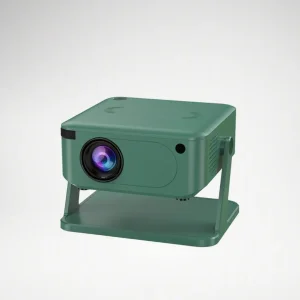
Browse our catalog of smart projectors, dynamic displays, and portable units, all available with direct-factory wholesale pricing and shipping options to Osaka Port.
Buying projection hardware directly from China involves managing technical details, regulatory requirements, and logistics. Here are details on our production and supply chain practices:
We build our projectors to meet Japan's safety requirements. Our power delivery components can be configured with certified power boards and cords that carry the circular PSE mark. For wireless communication, we integrate RF modules that match TELEC standards. If your project has specific VCCI Class B requirements for EMI shielding, our engineers can adjust the internal housing layout to control electromagnetic emission levels.
Our main factory in Dongguan is located approximately 40 minutes from the Hong Kong Port, giving us access to direct container shipping routes. Typical sea freight transit to Osaka Port takes 6 to 9 days after container loading. For urgent orders, air shipments via Kansai International Airport (KIX) take 2 to 3 business days from Hong Kong. Lead times for assembly vary: standard white-box products ship within 10 to 14 days, while OEM orders with custom packaging typically require 25 to 30 days.
Yes. We provide firmware customization services. Our software team can modify the system ROM to lock down the user interface, pre-load specific APKs, configure localized Japanese menus, and define boot behavior. We also support setting up Google TV configurations on select hardware platforms.
We check each unit's thermal performance and color accuracy before shipping. Our testing department uses dedicated aging rooms to run projects under full illumination for 4 to 8 hours. This process helps us identify early electronic or fan components failures, maintaining our field defect rate below 0.5%.
For standard products, our Minimum Order Quantity (MOQ) starts at 100 units. For custom OEM printing and packaging, the MOQ is 500 to 1,000 units depending on the model. Our typical payment structure is a 30% deposit to initiate production, with the remaining 70% due upon quality sign-off before shipment. We welcome third-party inspectors at our Dongguan facility prior to final loading.
 Youxi projection